The Future Was Already Black
Master Series Bible · the production constitution for the project.
A free Black astronomer helps calculate the federal district boundary in 1791. The originals, the receipts, and the disclosed reconstructions.
Open the Dossier → Production StatusTHE FUTURE WAS ALREADY BLACK
Master Bible
Working subtitle: An Archive of Black Future-Making
Editorial version: 1.0
Research snapshot: August 23, 2026
Launch target: September 14, 2026
Status: Editorially developed; title, domain, and legal clearance remain open gates
This document is the editorial, research, design, rights, data, and launch authority for the project. It converts the source plan into rules a researcher, writer, designer, editor, and developer can apply without guessing. Historical claims in the three launch dossiers are linked to primary or institutional sources. Interpretations are identified as interpretations. This is not legal advice; counsel should review trademark, publicity, digital-replica, and close fair-use decisions before commercial publication.
1. Brand statement
The one-sentence promise
The Future Was Already Black is a receipts-first multimedia archive showing how Black people imagined, measured, performed, narrated, designed, and built futures long before the culture had one name for that work.
Positioning
The project is not a list of famous Afrofuturists and not a generic Black-history channel with a space-age skin. It is an evidence-led argument about future-making. Each episode starts with a documented person, work, system, place, performance, or instrument and asks what it made possible to imagine, inhabit, perform, or build when the present tried to deny that possibility.
The archive joins two modes that are usually separated:
- The reveal: a clear, memorable story that makes an overlooked act of future-making legible.
- The receipts: primary records, institutional holdings, rights information, disagreements, and relationship nodes that let the audience inspect the argument.
The Smithsonian defines Afrofuturism as the reframing of past, present, and future through a global Black lens and centers Black contributions to science, technology, and culture. NMAAHC describes it as Black identity, agency, and freedom expressed through works and activism that envision liberated futures. Those definitions establish a strong field, but this project deliberately reaches both before and beside the term. Smithsonian National Air and Space Museum NMAAHC
Editorial thesis
The archive demonstrates four connected propositions:
- Black future-making existed before the word Afrofuturism.
- An imagined future can be literary or sonic, but it can also be a chart, clock, map, institution, game cartridge, telescope, city model, or recruitment campaign.
- Classification must clarify context rather than retroactively conscript every Black innovator into one movement.
- Evidence and disagreement are part of the storytelling, not back-office material.
Mark Dery introduced the term in his 1994 essay “Black to the Future” around African American themes, technoculture, and images of technology and enhanced futures. NMAAHC credits Dery’s conversations with Samuel R. Delany, Greg Tate, and Tricia Rose, then notes the subsequent community-building work of Alondra Nelson and other writers, artists, and technologists. The archive should therefore never imply that the term created the practices it later helped describe. Dery’s essay NMAAHC’s terminology history
Audience and value
The primary audience is a curious adult who likes cultural history, design, speculative fiction, music, technology, and Black studies but does not need specialist training. The secondary audience is educators, students, artists, designers, and researchers looking for a navigable entry point with sources they can follow.
The audience should leave every episode with three things:
- one fact that changes how they place Black people in the history of the future;
- one artifact or primary record they can inspect themselves;
- one new relationship to follow through the archive.
Voice
The voice is exact, warm, curious, and lightly astonished. It teaches without flattening conflict. It is willing to say “the record does not support that,” “the catalog credit is incomplete,” and “scholars disagree.” It does not use the language of discovery to imply that institutions or communities did not already know the history.
Use: “The surviving record shows,” “cataloged as,” “one scholar argues,” “the claim remains disputed,” “this reconstruction is based on.”
Avoid: “secret genius,” “forgotten by history,” “the first ever” without scoped evidence, “ahead of their time,” and any claim that a present-day label was a historical person’s self-description without proof.
Brand line and recurring question
Brand line: The future was imagined, measured, performed, narrated, designed, and built by Black people before the culture received a single name for all of it.
Test question: What did this person or work make possible to imagine, inhabit, perform, or build that their present tried to deny?
Non-negotiables
- Receipts before reach.
- Original artifacts before generated spectacle.
- Specific credit before lone-genius mythology.
- No invented quotations, facial likenesses, events, architecture, or documents.
- No unlabeled AI reconstruction.
- No em dashes in public copy.
- No episode advances from RESEARCH to SCRIPT until major claims have supporting sources and contested claims are marked.
2. Classification taxonomy
The taxonomy is an editorial navigation system, not a ranking and not a claim that every subject chose the label. A record may carry one primary classification and one optional secondary classification. The classification must be supported by an editorial note and a source when it relies on historical self-identification or institutional framing.
ROOT
Definition: A person, work, or practice created before Afrofuturism was named, or outside explicit use of that name, that legitimately forms part of the field’s intellectual, aesthetic, narrative, or material lineage.
Use ROOT when: the record joins Black experience to a contested future, speculative world, emancipatory possibility, scientific representation, or future-oriented public act, but the maker could not or did not claim the later label.
Worked example: NMAAHC calls Benjamin Banneker a prototype of an Afrofuturist and W.E.B. Du Bois a proto-Afrofuturist. This archive classifies both as ROOT, preserving the museum’s lineage argument without pretending either man used a term introduced much later. NMAAHC exhibition
Test question: Is the future-making function documented, and can we explain the lineage without writing a present-day identity backward onto the subject?
Failure mode: treating “old + Black + science” as sufficient. Historical importance alone does not make a ROOT entry.
AFROFUTURIST
Definition: A person, collective, work, or practice explicitly situated in Afrofuturism through self-identification, creator language, sustained critical consensus, or responsible institutional framing.
Use AFROFUTURIST when: the relationship to the movement is explicit and materially relevant to the work, not a marketing tag added because the imagery includes space, technology, or Black people.
Worked example: The Smithsonian describes Sun Ra as a sonic architect of Afrofuturist music and explains the ancient-Egypt and cosmic future frame in his work. That is sufficient institutional grounding for AFROFUTURIST. National Air and Space Museum
Test question: Who applies the label, where, and with what evidence? If the answer is only “we do,” the classification is not ready.
Failure mode: using the category as a synonym for Black speculative culture everywhere.
FUTURE MAKER
Definition: A person or group whose material work expanded the conditions of possible Black life or collective futures through science, engineering, infrastructure, institutions, education, policy, design, or technology, without requiring an Afrofuturist identity.
Use FUTURE MAKER when: the future-making is concrete and documented, while calling the maker an Afrofuturist would override their own field, context, or language.
Worked example: George Carruthers developed the far-ultraviolet camera and spectrograph placed on the Moon during Apollo 16. NASA identifies it as the first Moon-based observatory and documents its ultraviolet images of Earth. Unless a source establishes Carruthers’s identification with Afrofuturism, classify him as FUTURE MAKER. NASA NASA technical record
Test question: What material capacity, access, system, or instrument changed because this person acted?
Failure mode: reducing an inventor to symbolic representation or assigning sole credit to team engineering. For example, The Strong says Jerry Lawson led the team that designed the 1976 Fairchild Channel F. Credit the team and Lawson’s leadership, not a fictional solitary invention. The Strong National Museum of Play
ADJACENT / CONTESTED
Definition: A work or practice in a related tradition whose creator, geography, politics, scholarship, or community use makes AFROFUTURIST incomplete, disputed, or inappropriate. The badge is an invitation to explain the distinction, not a miscellaneous drawer.
Use ADJACENT / CONTESTED when: a creator prefers another term; scholarship is divided; the work shares methods but not the movement’s historical location; or an entry is included to teach a boundary.
Worked example: Nnedi Okorafor coined Africanfuturism because she needed language more directly rooted in African culture, history, and mythology. Her stated distinction should control the record. Work she identifies that way receives ADJACENT / CONTESTED with preferred_term: Africanfuturism, not an imposed AFROFUTURIST badge. Publishers Weekly interview Okorafor essay copy
Test question: What distinction would be erased if we used the broader label?
Failure mode: making the category sound suspect. “Contested” describes classification, credit, or interpretation, not the value of the work.
Decision sequence
Apply these questions in order:
- Did the creator or collective explicitly use Afrofuturist language for the relevant work? If yes, AFROFUTURIST is presumptively appropriate.
- Does the creator use a different future-oriented tradition or reject the label? If yes, use ADJACENT / CONTESTED and preserve the preferred term.
- Is the work earlier than the term but documented as a meaningful lineage, proto, or root? If yes, use ROOT.
- Did the person materially build future capacity without documented movement identity? If yes, use FUTURE MAKER.
- If none fits, do not force the record into the archive. Write a research note and leave classification open.
Required classification note
Every published record stores:
classification: ROOT
classification_basis: "Applied editorially to a pre-1994 work with documented Black future-making function. Not a historical self-description."
classification_source: "https://..."
preferred_term: null
reviewed_on: 2026-08-23
3. Visual language and style system
Art direction: editorial reconstruction
The visual system should feel like an archive being actively reconstructed on a worktable: cream paper, saturated analytical color, enlarged document details, crop marks, index labels, handwritten calculations, map lines, and precise motion. It should not look like generic neon science fiction, a dusty heritage documentary, or a fake museum interface.
The visual hierarchy is:
- authentic document or artifact;
- documentary photograph with known source and rights status;
- data, map, or diagram derived from cited evidence;
- labeled editorial reconstruction;
- abstract connective motion.
Generated imagery must never displace a usable primary artifact merely because a generated scene is more cinematic.
Palette
#15131BBody copy, outlines, dark field#F4E9D4Primary paper and light text#241A4BROOT, night sky, historical depth#62A98BAFROFUTURIST accent, growth, signal#CC642FFUTURE MAKER accent, mechanism, heat#E06B5Dhuman emphasis, alerts, annotations#4C9DA5ADJACENT / CONTESTED accent, maps, systems#FFF9EEHigh-readability cards and long copyApproved body-copy pairs are Ink on Cream, Cream on Indigo, Cream on the dark badge variants below, and Ink on the four light accents. The tested contrast ratios range from 4.76:1 to 15.30:1, meeting the WCAG AA 4.5:1 threshold for normal text. Do not infer that a palette token is safe in every pairing; test actual production colors and overlays. WCAG 2.2 contrast guidance
Typography
IBM describes Plex as a typeface built for international and digital use and provides serif, sans, mono, and condensed families. Use IBM Plex Mono for machine-readable metadata, never as “computer” decoration. IBM Design Language
Recommended web sizes:
- Display:
clamp(3rem, 8vw, 7.5rem), line-height0.88to0.95. - Section heading:
clamp(1.75rem, 4vw, 3.25rem), line-height1.0. - Prose:
clamp(1.05rem, 1.4vw, 1.25rem), line-height1.55to1.7, measure58chto72ch. - Metadata:
0.875remminimum, line-height1.4.
Classification badges
Badges are functional metadata. They always show the full word, never color alone.
#241A4B#F4E9D4concentric root rings#145A46#F4E9D4four-point signal star#8F3B1B#F4E9D4joined circuit nodes#075B63#F4E9D4split bracketBadge anatomy: 1 px Ink border, 6 px square radius, 0.7em by 0.9em padding, IBM Plex Mono uppercase, and a visible focus state when interactive. Tooltip or adjacent copy must expose the classification basis.
AI disclosure badge
Short badge: AI-ASSISTED INTERPRETATION
Expanded disclosure: “Visual interpretation based on documented historical sources. This is not an archival photograph.”
Use a dark coral background #8E3741 with Cream text, an outlined synthetic-aperture glyph, and a persistent link to the media record. The media record must list the model or production method, human editor, source images or documents, factual constraints, changes after generation, and approval date.
The badge appears on the asset itself in carousels and video, not only in a caption that can be cropped away. It stays visible for at least three seconds in motion and appears in alt text.
Lower thirds
Three-line maximum:
BENJAMIN BANNEKER
Mathematician, astronomer, almanac maker
ROOT | 1731-1806
- Name: Oswald, 32 to 44 px at 1080p.
- Descriptor: EB Garamond or Spectral, 25 to 32 px.
- Metadata: IBM Plex Mono, 20 to 24 px.
- Background: Cream card at 96 percent opacity with Ink border; badge color is a 6 px leading rule.
- Safe area: 8 percent from left and bottom on 16:9; 10 percent on 9:16.
- Living people: use the role they publicly use and confirm spelling and pronouns from a first-party source.
Source cards
Every source card includes:
[RECEIPT TYPE]  [SRC-000123]
Creator. Title. Date.
Holding institution or publisher.
Specific locator: page, item, box, timestamp, or chart number.
Rights: status and credit line.
Short URL or QR code to the archive source record.
Card colors follow receipt type, not episode classification. DISPUTED / CONTESTED uses a Coral top rule and must state what is disputed in plain language. Never use a screenshot of a search-result page as a source card.
Title cards
Series open, 2.0 seconds:
THE FUTURE
WAS ALREADY
BLACK
The three phrases arrive as document stamps, then align into one field. No galaxy stock, glitch noise, chrome lettering, or generic HUD elements.
Episode open, 2.5 seconds:
EPISODE 001  |  ROOT
BENJAMIN BANNEKER
THE SKY WAS EVIDENCE
Section card, 1.0 second: THE RECEIPTS, WHAT THE RECORD SHOWS, WHERE SCHOLARS DISAGREE, or FOLLOW THE CONNECTION.
End card, 3.0 seconds: OPEN THE DOSSIER plus canonical archive URL, episode ID, and one next relationship node.
Image and motion rules
- Crop documents to reveal evidence, then pull back to show context.
- Animate lines from actual charts or calculations only after the original is established.
- Never make a still portrait blink, speak, or perform.
- Do not clone a deceased or living person’s voice.
- Use parallax only when layer separation is defensible; do not invent depth inside flat archival images.
- Captions and on-screen sources remain readable at phone size.
- Alt text distinguishes an archival image, a detail crop, a diagram, and an editorial reconstruction.
4. Episode template and production package
Mandatory dossier
No script begins until every field below is completed or explicitly marked OPEN, with an owner and due date.
UNKNOWN blocks publication of that assetClaim ledger inside every dossier
CLM-001Exact sentence proposed for publicationVERIFIED / DISPUTED / INFERENCE / OPENSource ID plus locatorsupports / complicates / disputesinitials and dateThe writer may simplify syntax but not enlarge the evidentiary scope. If a source says “may be the first,” public copy cannot say “was the first.”
Reel template, 60 to 90 seconds
At 60 seconds, compress the artifact and constraint beats. Never remove the source route or disclosure.
Carousel template, 10 slides
- Wait, what? One verified hook and classification badge.
- Who? Name, dates, place, one-sentence role.
- When? A compact timeline with date precision visible.
- What was created? The artifact or system in original form.
- What was the present doing? The historical constraint.
- What made this radical? Evidence-led analysis, not hero worship.
- Why it belongs in Black future-making. Apply the test question.
- What came after? One to three sourced relationship nodes.
- What is disputed? Myth correction, credit issue, or scholarly disagreement.
- Receipts and action. Three strongest sources, archive link, next episode.
Every slide carrying a factual claim gets a compact source ID. Slide 10 expands the IDs; the archive provides full citations.
Archive entry template, 900 to 1,500 words
Episode folder and file contract
EP001-banneker/
  DOSSIER.md
  CLAIMS.csv
  SOURCES.bib
  RIGHTS.csv
  SCRIPT.md
  TRANSCRIPT.vtt
  assets/
    originals/
    working/
    generated/
    deliverables/
  exports/
    reel-9x16.mp4
    carousel-1080x1350/
    archive-hero.webp
Originals are read-only. Working derivatives never overwrite them. Every generated asset filename ends in _AI and every public export inherits its media and rights IDs in the archive record.
Editorial pipeline
IDEA -> RESEARCH -> VERIFIED -> SCRIPT -> VISUALS -> MOTION -> EDIT -> FACT CHECK -> SCHEDULED -> PUBLISHED -> ARCHIVED
Hard gates:
- RESEARCH to VERIFIED: claim ledger complete; source leads audited.
- VERIFIED to SCRIPT: no major claim marked OPEN.
- VISUALS to MOTION: rights status and disclosures complete.
- EDIT to FACT CHECK: transcript, on-screen copy, captions, and asset list frozen.
- SCHEDULED to PUBLISHED: link, mobile readability, captions, alt text, credits, analytics, and corrections contact tested.
5. Source, receipts, rights, and living-people policy
Source hierarchy
Use the highest available tier that directly supports the claim:
- Primary source: original work, letter, record, patent, chart, transcript, or contemporaneous publication.
- Museum / archive: item catalog, finding aid, curator essay, or institutional collection guide.
- University press: critical edition, scholarly monograph, or chapter.
- Peer-reviewed research: journal article or reviewed conference paper.
- Recorded interview: first-person account with stable provenance.
- Reputable journalism: reported secondary context.
- Everything else: discovery lead only unless no better evidence exists and the limitation is disclosed.
A source’s prestige does not cure a poor match. A museum overview cannot establish the wording of a letter when the letter is digitized. A recent article cannot establish a publication date better than the first edition’s title page.
Receipts layer
Every published episode ends with five labeled groups:
PRIMARY SOURCEMUSEUM / ARCHIVESCHOLARSHIPFURTHER READINGDISPUTED / CONTESTED CLAIMS
Every source record requires creator, title, date, publisher or holding institution, stable URL, access date, exact locator, source tier, rights status, and the claims it supports. A screenshot is not a receipt. A URL without a locator is incomplete for a long document.
Evidence rules
- Factual claims in episode scripts, captions, cards, and alt text map to claim IDs.
VERIFIEDmeans the cited source supports the public wording, not merely the topic.DISPUTEDmeans credible sources conflict or a credible interpretation contests another.INFERENCEmeans the evidence supports a reasoned conclusion that is not directly stated. Public copy labels it as an inference.OPENblocks the claim from public release.- A source may support, complicate, or dispute a claim. The database preserves all three relations.
- Correct silent transcription errors in private notes, but quotations retain original spelling. Use short quotations only when wording matters.
Rights workflow
For every visual, audio clip, text excerpt, font, and dataset:
- Identify the work and the specific file or copy.
- Identify creator, date, holding institution, and any donor or contractual limits.
- Record copyright status separately from physical ownership and repository access rules.
- Record publicity, privacy, cultural, and ethical concerns separately from copyright.
- Choose one status:
LICENSED,PUBLIC_DOMAIN_US,CC_LICENSED,FAIR_USE_REVIEWED,PERMISSION_PENDING,UNKNOWN, orDO_NOT_USE. - Store the required credit line, license URL, expiration, territory, platform limits, and evidence file.
- Recheck before each new medium, sponsor use, merchandise use, or paid promotion.
The U.S. Copyright Office explains that a photograph’s subject generally does not own the photograph’s copyright and that ownership of a physical copy is distinct from copyright in the work. It also states that fair use has no fixed word, percentage, or duration formula. Copyright Office photography and fair-use FAQ
Fair use
Fair use is a case-specific legal analysis, not a house license. Section 107 requires consideration of purpose and character, nature of the work, amount and substantiality, and market effect. Educational purpose helps but is not dispositive. 17 U.S.C. §107 Copyright Office guidance
Internal FAIR_USE_REVIEWED notes must document:
- the critical, historical, or analytical purpose;
- why the selected portion is necessary;
- the amount used and whether it includes the work’s core expressive value;
- the transformation supplied by narration, annotation, comparison, or analysis;
- potential market substitution;
- lower-risk alternatives considered;
- reviewer, date, and counsel escalation if risk is material.
Do not use a full-resolution decorative image under a fair-use theory when a licensed or public-domain alternative can do the job. Do not assume social-media availability grants reuse.
Public-domain and open material
- Prefer item pages that state rights, not age-based intuition alone.
No known restrictionsis not identical to a warranty of public-domain status. Preserve the institution’s exact wording.- Preserve Creative Commons attribution, license link, title, creator, and modification notice.
- Do not apply the Public Domain Mark yourself to a work without a defensible status review.
- Record U.S. status separately from global use. The NYPL, for example, labels its digitized 1792 Banneker almanac public domain in the United States while warning that other countries may differ. NYPL item record
AI-assisted historical interpretation
AI imagery is a production method, not evidence. It must be based on cited records and labeled on the asset.
Required public label: “AI-assisted historical interpretation.”
Required reconstruction disclosure: “Visual interpretation based on documented historical sources. This is not an archival photograph.”
Do not generate:
- a fake primary document;
- a photorealistic “lost photograph”;
- speech, handwriting, or a quotation not in the record;
- a living person’s face or voice without documented consent and rights review;
- a deceased person’s realistic voice performance;
- a decisive version of a disputed event;
- sensitive trauma as spectacle.
The Copyright Office states that AI-assisted work can contain copyrightable human authorship, but prompts alone do not supply the required authorship. Preserve human selection, arrangement, editing, and disclosure records rather than promising exclusive rights in raw model output. Copyright Office Part 2 announcement
Living people and digital replicas
Educational framing does not automatically resolve copyright, publicity, privacy, endorsement, or digital-replica risk. For living people:
- prioritize their ideas, artifacts, workspaces, processes, and licensed editorial images;
- use first-party sources for names, roles, pronouns, and current affiliations;
- obtain written consent for a realistic generated likeness or voice;
- prohibit voice cloning by default;
- do not place the person in an invented event, costume, quotation, or endorsement;
- separate editorial use from advertising and merchandise review;
- provide a correction and removal contact.
State rights vary. California’s statute is one example: its postmortem provision now defines and regulates highly realistic digital replicas while including specified news, comment, scholarship, satire, parody, documentary, historical, and biographical exceptions. That does not create a nationwide blanket exception, and commercial adjacency can change the analysis. California Civil Code §3344.1
The U.S. Copyright Office recommended a federal digital-replica law in 2024. As of this research snapshot, the Copyright Office’s legislative page lists 2026 NO FAKES bills as introduced, not enacted. Treat federal law as unsettled and recheck before publication. Copyright Office digital-replica report announcement Copyright Office legislative tracker
Corrections policy
Each archive page displays last_fact_checked, version history, and a correction contact. Material corrections produce a dated note explaining what changed and why. Social posts receive a visible correction where the platform permits. Quietly replacing an incorrect historical claim is not sufficient.
Source-plan lead audit
Audit completed August 23, 2026. “Verified” means the page resolves and is appropriate as a starting point, not that it supports every possible claim.
6. Deep research briefs: Episodes 001 to 003
Episode 001: Benjamin Banneker, The Sky Was Evidence
Dossier identity
ROOTWhy this opens the series
Banneker makes the archive’s wider argument immediately. His future-making was not fictional scenery. It was measurement, publication, public knowledge, and political address. He worked with instruments and tables, then turned an almanac manuscript into evidence against claims of Black intellectual inferiority. The episode can therefore move from sky to boundary to printed page to democratic contradiction without pretending that eighteenth-century science was detached from power. Library of Congress almanac Banneker’s letter
The episode must also model myth correction. The documented record supports Banneker’s astronomical and calculation work on the boundary survey. It does not support presenting him as the lone surveyor of Washington or as the man who recreated Pierre L’Enfant’s city plan from memory. National Register documentation places him with Andrew Ellicott’s team from February to April 1791 and specifies astronomical observations and calculations associated with locating the south cornerstone; field crews performed the line surveying. National Register registration form
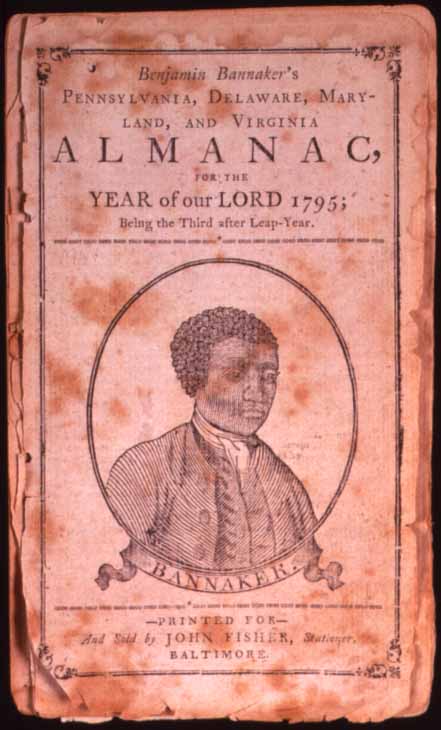
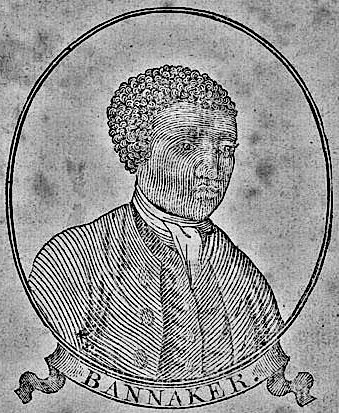
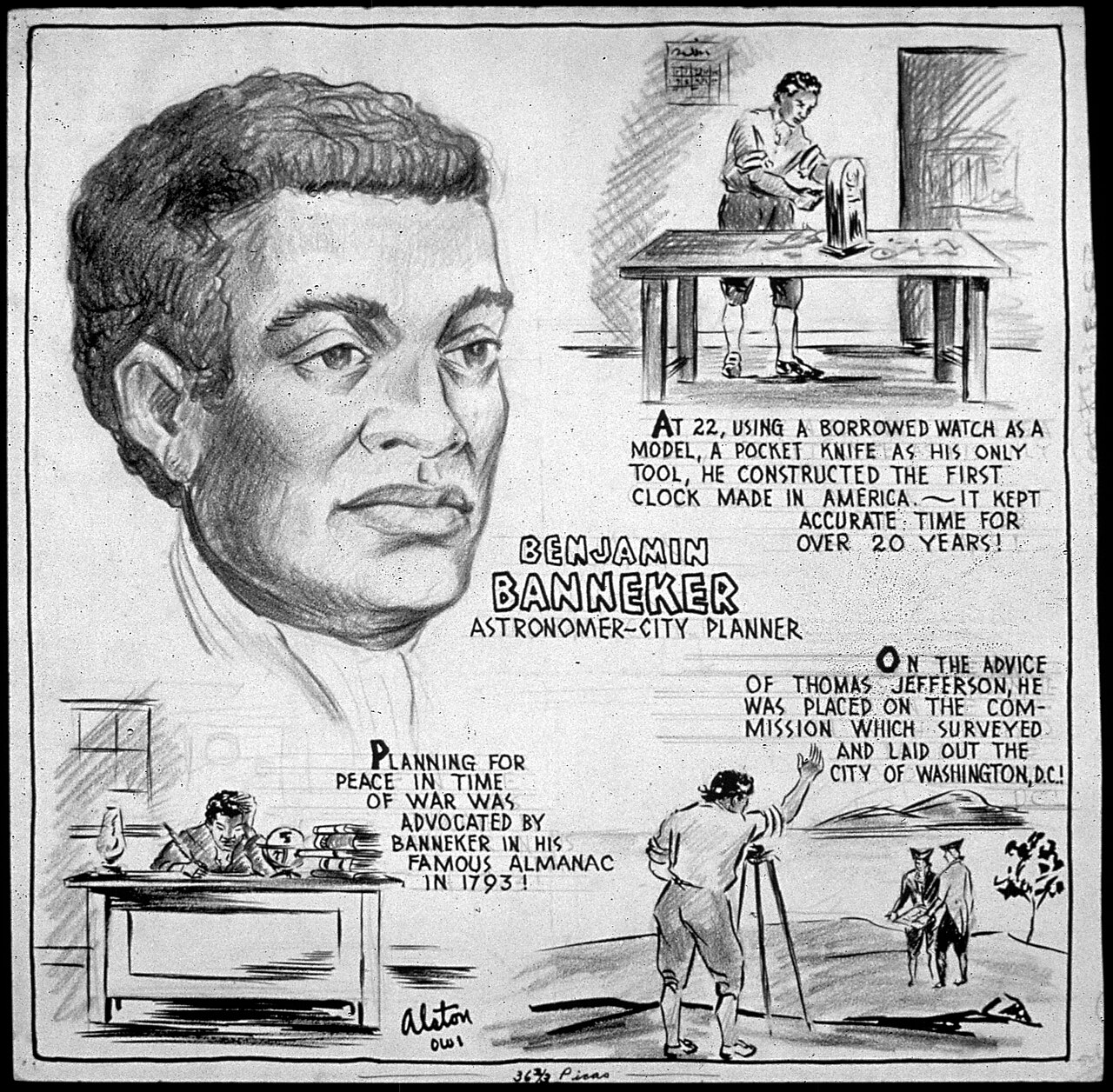
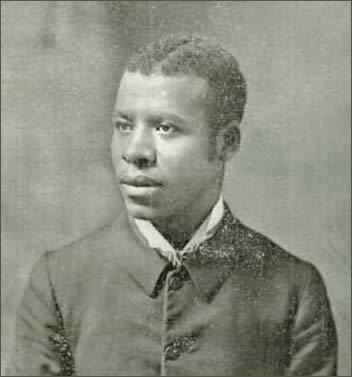
The portrait above is the face of the series opener. The 1791 almanac manuscript and the 1791 letter to Jefferson are the artifacts to feature as close-up shots: the printed page was Banneker's proof of capacity, and the letter made that proof political.
Major verified claims
BAN-001Benjamin Banneker was born free in Baltimore County on November 9, 1731, and died on October 9, 1806.VERIFIED. National Park ServiceBAN-002A 1774 deposition by his mother, Mary Banneker, identifies Benjamin as the lawful son of the deceased Robert Banneker.VERIFIED documentary anchor. Maryland State ArchivesBAN-003Banneker worked with Andrew Ellicott’s federal district survey team from February to April 1791, making astronomical observations and calculations used to establish the boundary.VERIFIED with scope correction. National Register documentationBAN-004On August 19, 1791, Banneker wrote Jefferson from near Ellicott’s Lower Mills, enclosed a manuscript almanac, and challenged the contradiction between professed liberty and slavery.VERIFIED. The recipient’s copy is identified as held by the Massachusetts Historical Society in the National Archives edition. Founders OnlineBAN-006Banneker’s almanac for 1792 contained astronomical calculations and practical calendar information and was printed in Baltimore by William Goddard and James Angell.VERIFIED. Library of Congress digitizationBAN-007Surviving Banneker materials include almanacs, an astronomical journal, the Jefferson correspondence, and a manuscript associated with the 1792 almanac.VERIFIED as separate holdings. Maryland Center for History and Culture journal record American Antiquarian Society finding aid Founders Online letter recordBAN-008No known contemporary portrait of Banneker survives; the familiar almanac woodcut was likely a stock image.VERIFIED caution. Smithsonian LibrariesBAN-009Banneker’s house burned at the time of his burial, destroying possessions that included his wooden clock.VERIFIED institutional account. National Park ServiceCensus and documentary evidence note
No personal 1790 census row is used to establish a Banneker claim in this dossier. The National Archives confirms that surviving 1790 Maryland schedules exist and are available through its microfilm program and partner services, but this audit did not locate a digitized institutional item page that identifies Banneker unambiguously. National Archives The dossier instead relies on the 1774 maternal deposition, the 1791 recipient’s letter and reply, the astronomical journal, the survey record, and surviving almanacs. This is stronger than attaching an unverified name match to the story.
Primary sources and documentary anchors
- Banneker to Jefferson, August 19, 1791. The National Archives edition gives the full text, identifies the recipient’s copy at the Massachusetts Historical Society, and records its receipt by Jefferson on August 26. It is the episode’s political spine. Founders Online
- Jefferson to Banneker, August 30, 1791. The Library of Congress holds and digitizes Jefferson’s response. It should be shown beside, not instead of, Banneker’s longer argument. Library of Congress
- The 1792 almanac. The Library of Congress provides a 49-image page view. Page 2 frames the publication as evidence against racist assumptions; later pages contain astronomical tables, practical data, and antislavery material. Library of Congress page view
- Astronomical journal. The Maryland Center for History and Culture catalogs calculations for the Sun, Moon, planets, and eclipses. Collection record
- 1774 deposition. Mary Banneker’s statement is a surviving family-status record and a better documentary anchor than unsourced genealogical repetition. Maryland State Archives
- Survey documentation. Use the National Register record for the boundary stones to scope Banneker’s work precisely. National Register documentation
Museum, archive, and institutional holdings
Scholarly interpretation and explicit disagreement
1. Was Banneker an Afrofuturist? NMAAHC calls him a prototype of an Afrofuturist. That is a defensible lineage interpretation, not contemporary identity evidence. Editorial decision: classify ROOT, cite the museum’s framing, and say plainly that Afrofuturism was named much later. NMAAHC NMAAHC term history
2. Did he survey Washington, DC? Broad public accounts often compress boundary calculation, line surveying, and city planning. The strongest scoped record says Banneker made astronomical observations and calculations for the south cornerstone during the federal district boundary survey. Editorial decision: say exactly that. Do not say he designed the city, surveyed every line, or recovered L’Enfant’s plan from memory. National Register documentation Founders Online editorial note
3. Is the famous image Banneker? Smithsonian Libraries says no known contemporary portrait exists and the repeated woodcut was likely stock. Editorial decision: never animate or label that face as a verified likeness. The absence itself becomes a teaching moment about archival desire. Smithsonian Libraries
4. Did he make America’s first clock? Institutional sources support a wooden clock associated with Banneker and report its destruction in the house fire, but the research reviewed here does not establish a safe national “first” claim. Editorial decision: say he made a wooden clock, avoid the superlative, and focus on the documented astronomy and publishing record. National Park Service
5. Did Jefferson accept Banneker’s equality argument? Jefferson’s courteous reply praised the example and sent the almanac to Condorcet, but the documentary edition traces his later disparagement of Banneker’s independence. Editorial decision: present the correspondence as a confrontation, not a conversion story. Founders Online editorial annotation Library of Congress contextual essay
Visual reconstruction plan
Primary visual grammar: original almanac pages, Banneker’s letter text, Jefferson’s reply, boundary-stone geometry, star positions, and hand-drawn calculation marks.
Permitted generated scenes:
- a non-portrait view of an observation tent at night, constrained by the survey documentation;
- hands recording a transit observation, with no invented legible writing;
- a spatial transition from celestial coordinate to boundary line;
- the interior light and materials of an eighteenth-century worktable, treated as atmosphere rather than a claimed room reconstruction.
Prohibited generated scenes: Banneker “remembering” a city plan, a verified face, a conversation with Jefferson, a heroic solo survey, a finished modern Washington skyline appearing in his imagination, or the lost clock presented as a known design.
Period anchors: astronomical instruments and observation-tent work from the survey record; printed almanac typography and paper from the digitized copy; the surviving boundary stones; Banneker’s stated location near Ellicott’s Lower Mills. Survey documentation Library of Congress almanac National Park Service boundary stone
Every generated frame carries the full reconstruction disclosure. The original document must appear before any reconstruction derived from it.
Rights and usage plan
- Preferred almanac source: NYPL’s 1792 item, which states U.S. public-domain status, or the Library of Congress copy after its item-specific rights note is recorded. NYPL Library of Congress
- Letter images: request repository terms for the Massachusetts Historical Society original. A documentary-edition transcription can support quotation, but does not automatically clear a repository scan.
- Boundary-stone imagery: use a current original production photograph, licensed image, or an institutional image whose rights statement permits the use.
- Portrait: no generated or stock portrait labeled as Banneker. A verified absence is preferable to false specificity.
Relationship nodes
worked_withAndrew EllicottFederal district boundary survey. National Register documentationinterpreted_asROOTEditorial classification supported by NMAAHC’s prototype framing. NMAAHCReel outline, 85 seconds
Carousel outline, 10 slides
- “A free Black astronomer helped calculate the federal district boundary in 1791.” Survey record
- Banneker, 1731 to 1806, Baltimore County, ROOT. National Park Service
- February to April survey, August letter, 1792 almanac. Survey record Founders Online Library of Congress
- Full almanac cover and one astronomy table. Library of Congress
- The political context: liberty proclaimed amid slavery.
- The almanac as public scientific evidence.
- Future-making test: measurement, publication, and a claim to equal human capacity.
- Nodes: Andrew Ellicott, Jefferson, printers Goddard and Angell, boundary stones. Survey record Library of Congress
- Myth check: no recovered city plan; no verified portrait; no safe “first clock” claim. Smithsonian Libraries Survey record
- Receipts: Founders Online, Library of Congress, National Register documentation, archive URL.
Archive outline, target 1,340 words
- Person, 140: free birth, family documentary anchor, dates, location. Maryland State Archives National Park Service
- Artifact, 210: astronomical journal, 1792 almanac, letter, reply, boundary calculations. MCHC Library of Congress Founders Online
- Idea, 180: numbers as public proof against racist theories of capacity.
- World, 180: slavery and Jefferson’s contradiction, without turning Jefferson into the protagonist.
- Future Echo, 130: link to Du Bois’s data portraits through the editorial theme “data as counter-claim,” labeled as a curatorial pairing rather than direct influence.
- Visual, 100: original-first treatment and missing portrait.
- Watch, 60: Reel and transcript.
- Listen, 40: Marc reads a short, cleared excerpt from the letter; no synthetic Banneker voice.
- Receipts, 180: primary and institutional source cards.
- Disagreement, 120: survey, plan-memory, portrait, and clock corrections.
Potential long-form cluster
Working title: “Black Measurement: Who Gets to Describe the World?”
Cluster: Banneker’s astronomy and boundary calculation; Du Bois’s data portraits; George Carruthers’s ultraviolet Earth; Valerie Thomas’s Landsat image processing. NASA documents Thomas’s management of image-processing and operations work for LACIE, making her a strong FUTURE MAKER node. NASA Science
---
Episode 002: W.E.B. Du Bois and the Data Portraits, Drawing a Future in Public
Dossier identity
ROOTWhy this follows Banneker
Episode 001 establishes measurement as a claim to capacity. Episode 002 asks what happens when measurement becomes public design. Du Bois and his collaborators did not merely collect figures. They organized line, shape, scale, color, comparison, and sequence to rebut a white supremacist account of Black life before an international audience. Cooper Hewitt describes the 63 diagrams as the work of Du Bois and Atlanta University students; the Library of Congress catalog alternates between individual Du Bois credit and collective Atlanta University credit at item level. The episode’s own credits must preserve that complexity. Cooper Hewitt Library of Congress collection
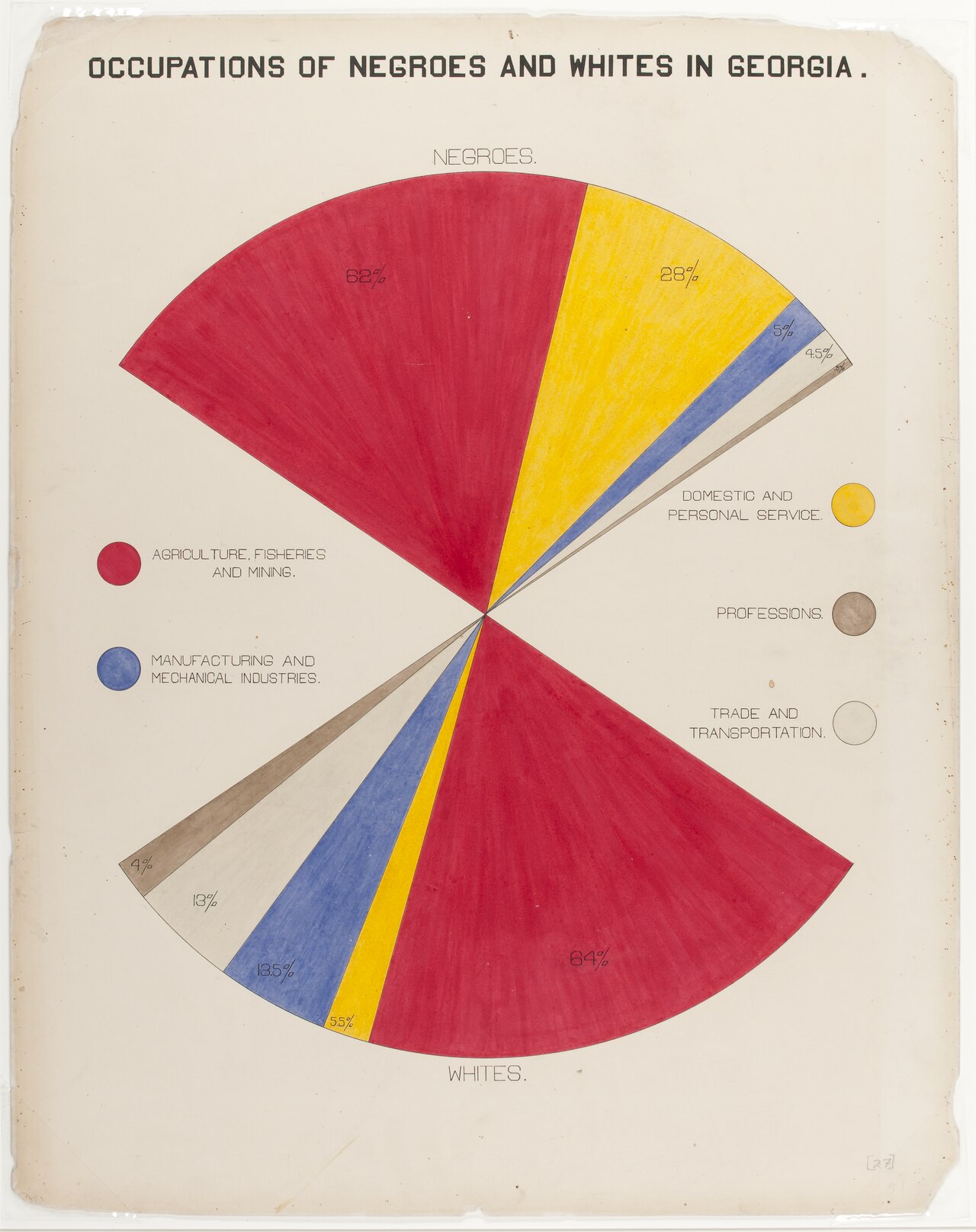
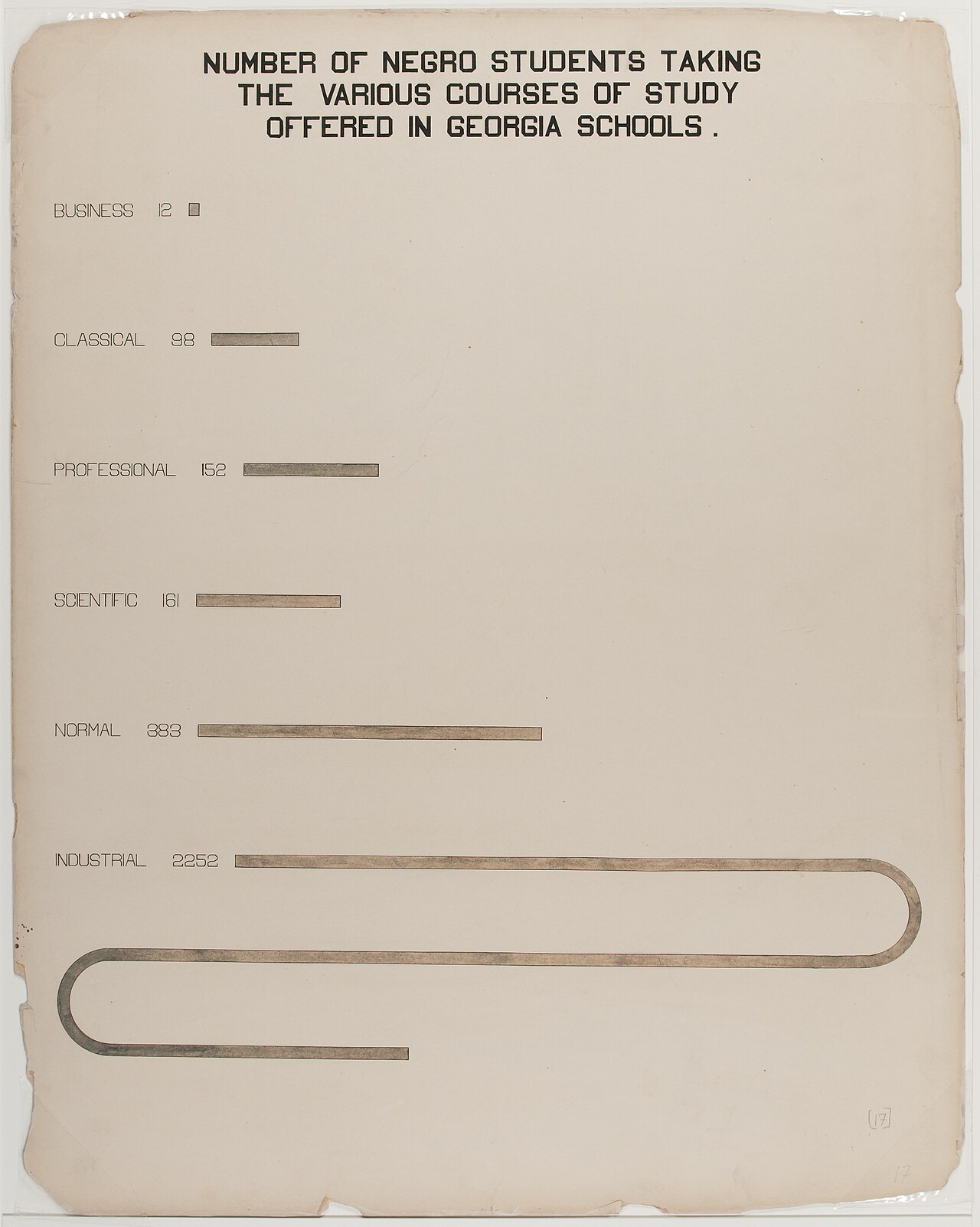
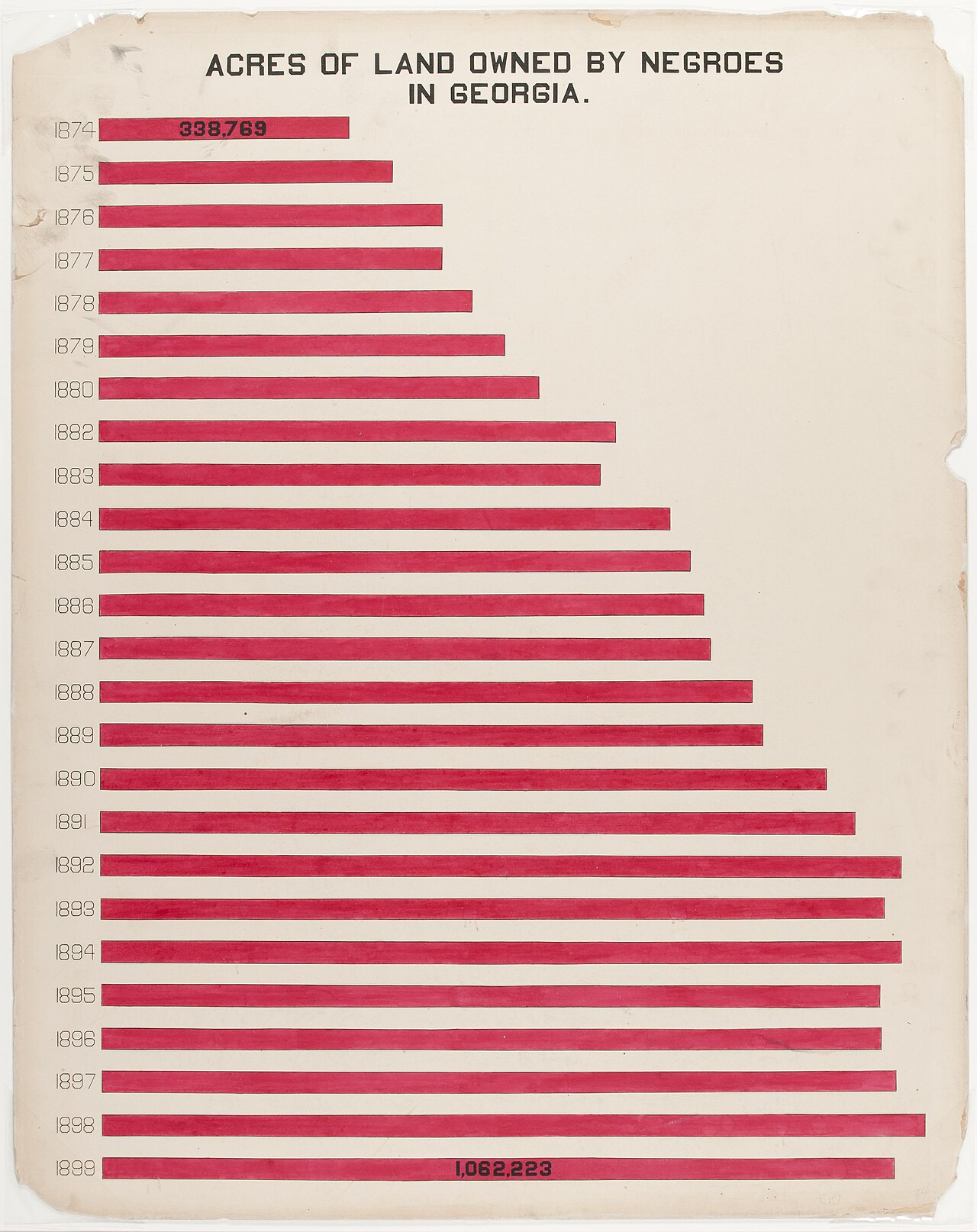
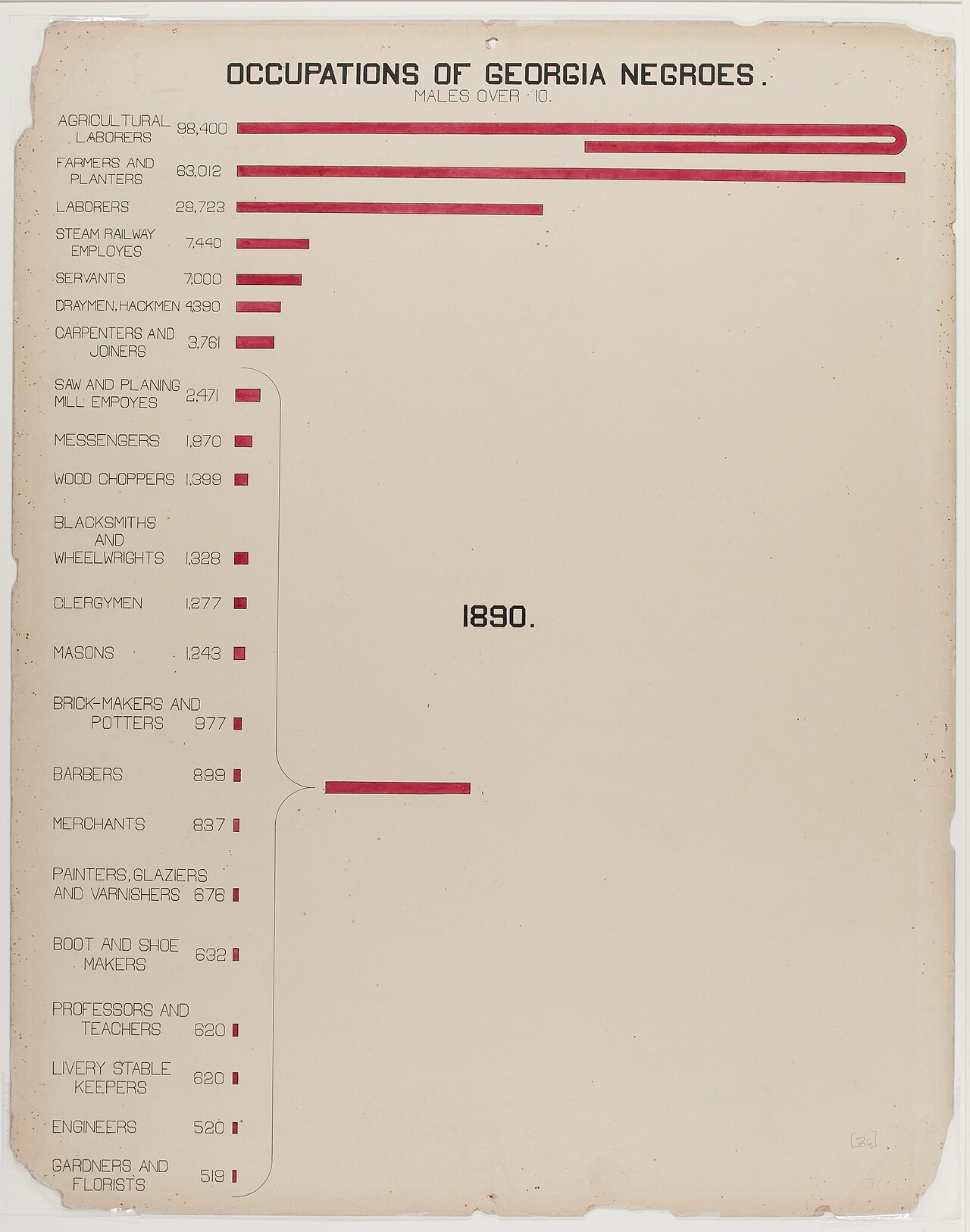
These are the data portraits in their original form: hand-drawn diagrams that made Black life visible through radical design at the 1900 Paris world's fair. The visual style of this episode should treat the charts as the star of the show, not as decoration.
Major verified claims
DUB-001The Exhibit of American Negroes included photographs, charts, publications, and legal documents assembled to show Black life and progress in the United States at the 1900 Paris Exposition.VERIFIED. Library of Congress collection overviewDUB-002Du Bois and Atlanta University students made 63 hand-drawn diagrams for the exhibit.VERIFIED collective wording. Cooper HewittDUB-003The 63-chart core is divided into 36 charts on the Georgia Negro and 27 charts in a national statistical series.VERIFIED from the Library of Congress group record, items 1 to 36 and 37 to 63. Library of Congress LOT 11931 recordDUB-004The Library of Congress broader collection description counts 72 drawings of charts, graphs, and maps, which is not the same scope as the 63-chart core.VERIFIED scope distinction. Library of Congress collectionDUB-005The exhibit’s data came from census statistics and research conducted by Du Bois and the Atlanta University team.VERIFIED at the level of the collection. CUNY case studyDUB-006One surviving chart tracks assessed value of taxable property owned by Black Georgians from 1875 to 1890 and is cataloged as ink and watercolor on 710 by 560 mm board.VERIFIED item record. Library of CongressDUB-007The larger Paris collection includes 363 photographs in four albums, 217 mounted photographs organized by subject, and three albums transcribing Georgia Black Codes, in addition to the drawings.VERIFIED. Library of Congress collectionDUB-008The Library of Congress identifies Du Bois as compiler of the four photo albums and names Thomas J. Calloway in the collection record.VERIFIED. Library of Congress collectionDUB-009Individual digitized chart records state “no known restrictions on publication,” while the fragile originals are not served.VERIFIED item-specific wording. Library of CongressCensus and documentary evidence note
The episode’s “census” evidence is the exhibit team’s statistical use, not a personal census return for Du Bois. The CUNY case study identifies census figures and Atlanta University research as data sources, while Library of Congress item pages give the title, subject, medium, date range, and catalog credit for each chart. CUNY case study Library of Congress item Do not label the complete series “1900 census data.” The documented charts include earlier ranges, such as 1875 to 1890 on the assessed-property chart. Library of Congress item
Primary sources and documentary anchors
- The charts themselves. The Library of Congress provides high-resolution files for individual charts, item metadata, measurements, and rights advisories. Assessed property chart First chart in the national series
- The four photograph albums. These images make the exhibit’s counter-archive of people, homes, businesses, schools, churches, and social life visible. The collection record identifies 363 album photographs. Library of Congress Example: home of an African American lawyer
- The Black Code albums. The larger collection contains three albums of transcribed Georgia laws covering 1732 to 1899. They establish that the exhibit placed achievement beside the legal production of racial constraint. Library of Congress
- The exhibit’s contemporary argument. The Library of Congress overview points to Du Bois’s 1900 “The American Negro at Paris” account and describes the charts as statistical and census presentations of conditions since emancipation. Library of Congress
- Related Du Bois research. The College-bred Negro is digitized by the Library of Congress and provides primary context for Atlanta University’s empirical program. Library of Congress
Museum, archive, and institutional holdings
Scholarly interpretation and explicit disagreement
1. Who made the portraits? Popular shorthand calls them “Du Bois’s data portraits.” Cooper Hewitt credits Du Bois and Atlanta University students; Library of Congress records sometimes name Du Bois alone and sometimes include Atlanta University. Editorial decision: series-level credit is “W.E.B. Du Bois and the Atlanta University team.” Item-level credits reproduce the holding catalog and add a note when catalog attribution differs. Cooper Hewitt Example collective LOC record
2. Are there 63 or 72 charts? Both numbers appear in institutional records because the scopes differ. The 63 are the two named chart series, 36 Georgia and 27 national. The collection-level record counts 72 drawings in the broader lot. Editorial decision: say “63 core data portraits” and explain the broader 72-drawing holding in the receipts. 63-chart record 72-drawing collection record
3. Are the charts proto-Afrofuturist? NMAAHC says yes; that is a contemporary curatorial interpretation. Editorial decision: use ROOT and explain that the future-facing quality lies in using data and design to make a suppressed Black present legible as a basis for a different future. Do not imply Du Bois used the later term. NMAAHC
4. Are they neutral data? No data portrait is simply transparent. The charts were advocacy, research, and design, constructed from available categories and chosen comparisons. Editorial decision: celebrate the formal invention while showing the source, date range, unit, and historical category for every animated value. If the team’s underlying worksheet is unavailable, do not reverse-engineer missing numbers from a shape.
Visual reconstruction plan
This episode does not need generated charts. The originals are visually stronger and more truthful.
Primary sequence: establish the physical board and hand-painted surface; isolate a line or spiral; animate only a traced overlay; return to the full original; reveal catalog metadata and source range.
Permitted generated scene: a clearly labeled spatial interpretation of the 1900 exhibit room, based on a period plan and contemporary descriptions, with no invented visitor reactions. A Library of Congress film panorama can establish the fair’s scale without pretending to show the exhibit interior. Paris Exposition panorama Library of Congress exhibit-context essay
Period anchors: original charts; album photographs; Black Code transcriptions; board dimensions; ink and watercolor media; Paris exposition plans. Library of Congress collection Assessed property chart
Prohibited: converting chart shapes into decorative patterns divorced from values; assigning animation credit to Du Bois alone; fabricating a photo of the team drawing the boards; calling 1900 values “1900 census data” unless the item’s source proves it.
Rights and usage plan
- Use Library of Congress digital files only after saving the item’s exact rights advisory and credit line. “No known restrictions on publication” must be repeated accurately and is not a warranty. Example item
- Photograph albums and charts can have different records. Rights review is item by item, not collection by assumption.
- Use only as much of a modern book or exhibition image as licensed or justified. The original charts are the preferred visual sources.
- Preserve artist and team credit in every caption, alt text record, and video end credit.
Relationship nodes
Reel outline, 88 seconds
Carousel outline, 10 slides
- “In 1900, Black data looked like the future.” NMAAHC
- Du Bois, Calloway, Atlanta University team, Paris, ROOT. Library of Congress
- 1899 to 1900 production and exposition timeline. Library of Congress
- One full original chart with title, unit, and date range. Library of Congress
- The American racial order the exhibit answered.
- Shape, color, and comparison as public argument.
- The future-making test: making Black life measurable on Black terms before an international public.
- The larger counter-archive: photos, mounted images, Black Codes. Library of Congress
- Credit and count check: collective production; 63 core versus 72 broader drawings. Cooper Hewitt Library of Congress
- Receipts: LOC item records, Cooper Hewitt, UMass, archive URL.
Archive outline, target 1,430 words
- Person, 130: Du Bois chronology and role, with collective-credit introduction.
- Artifact, 230: 63 core charts, two series, material dimensions, wider exhibit objects. Library of Congress Item record
- Idea, 200: data design as counter-representation.
- World, 200: racism, the international exposition, and the politics of display.
- Future Echo, 140: information design, Black study, and the archive’s Banneker-to-Carruthers “measurement” path, clearly labeled as curatorial relation.
- Visual, 100: original-first tracing method.
- Watch, 60: Reel and accessible transcript.
- Listen, 40: optional narration over a silent original; no simulated Du Bois voice.
- Receipts, 190: item-level links and collection scope.
- Disagreement, 140: authorship, count, and proto-Afrofuturist framing.
Potential long-form cluster
Working title: “The Data Was Never Neutral.”
Cluster: Banneker’s calculations; Du Bois and Atlanta University; Black census and mapping projects; Landsat image processing under Valerie Thomas; contemporary Black data practice. Each episode must distinguish numerical source, visual design, institutional power, and public claim.
---
Episode 003: Sutton E. Griggs and Imperium in Imperio, The Government Beneath the Government
Dossier identity
ROOTWhy this is Episode 003
Banneker measures a boundary. Du Bois and his team visualize a population. Griggs imagines a state inside the state. The sequence moves from number to public diagram to speculative institution, proving that the series is about multiple technologies of future-making.
The novel is not safely reducible to a Black nationalist manifesto. It constructs opposing leaders, Belton Piedmont and Bernard Belgrave, and ends with betrayal, execution, and disclosure. The primary text has Bernard propose secret military preparation and a demand for Texas and Louisiana; Belton rejects the plan as treason and insists on fighting for rights within the Union. Primary text, plan of action
Its 1899 publication belongs to a specific political contraction. The Library of Congress dates Reconstruction from 1865 to 1877 and describes the Jim Crow segregation and disenfranchisement that followed. Its period overview notes that lynching peaked in 1892, seven years before the novel, while the National Archives records the 1896 Plessy v. Ferguson ruling that supplied constitutional sanction for “separate but equal.” These conditions make the novel’s conflict over protection, citizenship, territorial sovereignty, and political violence historically legible. Library of Congress Reconstruction guide Library of Congress postwar overview National Archives timeline
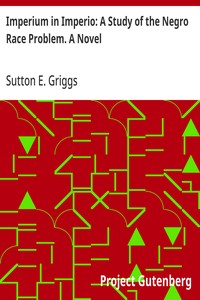
Griggs is the novelist behind the third episode's speculative state-within-a-state. The book cover above is the artifact to feature: a 1899 first edition that imagined a secret Black congress, then let its leaders debate whether to reform America or seize territory from it.
Major verified claims
GRI-001Elbert Sutton Griggs was born June 19, 1872, in Chatfield, Texas, and later reordered his name as Sutton E. Griggs.VERIFIED. SHSU finding aidGRI-002Griggs attended Bishop College and Richmond Theological Seminary and worked as a Baptist minister.VERIFIED. Handbook of TexasGRI-003Imperium in Imperio was published in Cincinnati by the Editor Publishing Company in 1899.VERIFIED bibliographic record. WorldCatGRI-004Griggs dated the novel’s preface March 1, 1899, at Berkley, Virginia.VERIFIED in the primary text. Project GutenbergGRI-005The novel imagines the Imperium as a secret Black government centered near Waco, with a congress, president, military planning, and a capitol concealed within Jefferson College.VERIFIED in the primary text. Project GutenbergGRI-006Bernard’s plan calls for land purchases, military fortifications, Black entry into the U.S. Navy, foreign alliances, seizure of Austin, and a demand for Texas and Louisiana.VERIFIED as a fictional proposal, not Griggs’s personal program. Project GutenbergGRI-007Belton rejects Bernard’s plan as treason and maintains loyalty to the Union while insisting on freedom.VERIFIED in the same primary scene. Project GutenbergGRI-008Griggs financed and distributed much of his own writing, including door-to-door and revival-meeting sales, and founded the Orion Publishing Company in 1901.VERIFIED institutional biography. SHSU finding aidGRI-009The Handbook of Texas says the novel “may be” the first Black nationalist novel and warns that characterizing Griggs only as a nationalist may overgeneralize his later work.VERIFIED as attributed interpretation, not settled fact. Handbook of TexasGRI-010Project Gutenberg labels its edition public domain in the United States.VERIFIED platform status. Project Gutenberg catalogCensus and documentary evidence note
No personal census return is used to establish Griggs’s life dates in this dossier. The exact birth evidence comes through the SHSU archival finding aid and is corroborated in University of Maryland scholarship; the publication evidence comes from the 1899 bibliographic record and the book’s own dated preface. SHSU University of Maryland study WorldCat Primary text The absence of a cited census row is explicit so a future researcher can add one without confusing a genealogy lead with verified evidence.
Primary sources and documentary anchors
- The 1899 novel. The primary text supplies the preface date, internal architecture, debate, political program, and ending. Plot claims must cite the chapter or passage, never a modern synopsis alone. Project Gutenberg full text
- First-edition bibliographic record. WorldCat records Cincinnati, Editor Publishing Company, 1899. WorldCat
- Griggs research collection. SHSU holds six boxes of research material, newspaper articles, and copies of writings. The finding aid is explicit that it is a research collection about Griggs, not a claim that every file is his original personal paper. SHSU
- Griggs’s publishing life. The SHSU biography records his Virginia Baptist newspaper work, direct sales, and 1901 Orion Publishing Company. SHSU
Museum, archive, and institutional holdings
Scholarly interpretation and explicit disagreement
1. Is the novel a Black nationalist blueprint? The Handbook of Texas notes the common nationalist reading but says extending that label across Griggs’s work may be an overgeneralization. A University of Maryland study reads the novel’s incompatible leaders and ambiguous ending as a deliberate move beyond binary political solutions toward collective action. Editorial decision: describe the nationalist plan as Bernard’s fictional proposal and the novel as a staged political conflict. Do not attribute Bernard’s entire program directly to Griggs. Handbook of Texas University of Maryland study
2. Is its ambiguity a flaw or a method? One scholarly line sees unresolved ideological conflict; another treats indeterminacy as pedagogy that forces readers to judge leadership and collective action. A recent MELUS article describes the novel through speculative pedagogy and an ambiguous ending, while Oxford scholarship reads it as a caution about demagoguery and nationalist conformity. Editorial decision: make the disagreement the episode’s intellectual center. MELUS Oxford scholarship
3. Is it “the first” Black nationalist novel? The Handbook’s wording is “may be.” Editorial decision: retain “may be,” or say “an early Black political and speculative novel.” Do not promote a contestable superlative into the hook. Handbook of Texas
4. Is it Afrofuturism? NMAAHC includes Griggs in an Afrofuturist reading list, while the novel predates the term by nearly a century. Editorial decision: ROOT, with emphasis on speculative institution-building, not a claim of historical movement identity. NMAAHC digital toolkit
Visual reconstruction plan
The primary artifact is the book. The secondary visual is a diagram of the fictional institution built only from the text.
Permitted generated scenes:
- a cutaway diagram of the fictional Jefferson College and concealed capitol, labeled
FICTIONAL SPACE RECONSTRUCTED FROM THE 1899 NOVEL; - a map of Bernard’s proposed actions, labeled
PLAN PROPOSED BY A FICTIONAL CHARACTER; - a period printshop or door-to-door book-sale detail constrained by Griggs’s documented publishing practice, without claiming a specific photographed event;
- abstract doubling of a public United States congress and a hidden fictional congress.
The novel describes a four-story building roughly 200 feet long and 180 feet wide, a central round tower, an elevator to a large fourth-floor room, and a hidden political function outside Waco. Those details can anchor a diagram, but the building must never be presented as a real Waco site. Primary text
Period clothing, architecture, and objects: first-edition typography and binding after a holding copy is cleared; late nineteenth-century newspaper columns from Baylor’s Waco collection; train, carriage, telegram, meeting table, bunting, and printed plan as described in the novel. These are textual or contextual anchors, not proof that the fictional events happened. Primary text Baylor 1890 newspaper
Prohibited: a fake photograph of the Imperium congress; a map that removes the story’s debate and makes Bernard’s plan look like Griggs’s policy; real victims of racial violence used as mood imagery; a verified Griggs likeness without provenance.
Rights and usage plan
- The Project Gutenberg text is labeled public domain in the United States. Preserve that territorial qualification. Project Gutenberg
- A scan supplied by a library can have contractual or repository restrictions even when the underlying 1899 text is public domain. Record the scan’s source and terms.
- SHSU allows research, teaching, and private-use reproduction with attribution but asks users to request permission for other uses or copyright information. Treat public social and commercial publication as a request case. SHSU
- Modern critical editions, introductions, annotations, and cover art remain separately protected. Do not copy them merely because the 1899 novel is public domain.
Relationship nodes
Do not create a direct influenced edge from Griggs to a later writer until scholarship or creator testimony supports it. Use shares_topic_with for editorial discovery links when influence is not established.
Reel outline, 90 seconds
Carousel outline, 10 slides
- “A secret Black government outside Waco, in a novel from 1899.” Primary text
- Sutton E. Griggs, 1872 to 1933, minister, publisher, novelist, ROOT. SHSU Handbook of Texas
- March 1 preface; Cincinnati publication; Reconstruction’s aftermath. Primary text WorldCat Library of Congress
- What he made: Imperium in Imperio. WorldCat
- The fictional institution: congress, president, military, concealed capitol. Primary text
- Bernard’s territorial plan, labeled as a character’s proposal. Primary text
- Belton’s refusal and the novel’s unresolved political problem. Primary text
- Future-making test: Black institutional sovereignty imagined as a system, not only a hero.
- Disagreement: nationalist blueprint, cautionary tale, or participatory political pedagogy.
- Receipts: primary novel, WorldCat, SHSU, scholarship, archive URL.
Archive outline, target 1,470 words
- Person, 150: birth, education, ministry, printing, self-distribution. SHSU
- Artifact, 230: bibliographic record, narrative frame, fictional institution. WorldCat Primary text
- Idea, 210: government within government and the problem of sovereignty.
- World, 210: the end of Reconstruction, Jim Crow segregation and disenfranchisement, the 1892 peak in recorded lynchings, and the 1896 Plessy ruling, tied to the novel’s political problem. Library of Congress National Archives
- Future Echo, 130: Black speculative institutions and later hidden-polity narratives, linked by topic unless influence is documented.
- Visual, 110: book-first approach and fictional-space label.
- Watch, 60: Reel and transcript.
- Listen, 50: Marc reads a short public-domain passage; no simulated Griggs voice.
- Receipts, 180: text, bibliography, finding aid, scholarship.
- Disagreement, 140: nationalism, ambiguity, and “first” claim.
Potential long-form cluster
Working title: “States That Did Not Yet Exist.”
Cluster: Martin Delany’s Blake; Griggs’s Imperium in Imperio; Pauline Hopkins’s Of One Blood; George Schuyler’s Black Empire or Black No More with separate rights and edition research; later Black speculative nations. MIT Press describes Hopkins’s 1903 work as a technologically advanced hidden Ethiopian city, while Library of America frames Schuyler’s 1931 Black No More as near-future satire. MIT Press Library of America
7. Archive data model and relationship graph
Design principles
The archive is a claim graph with publishing views, not a stack of articles. People, artifacts, places, dates, movements, topics, and episodes are reusable records. Sources support claims. Media have their own rights. Relationships are evidenced edges, not manually written vibes.
Use UUID primary keys internally and stable human-readable slugs publicly. Store dates as structured ranges with precision, not display strings. Store URLs once in source or media records, then relate them. Use strict enumerations for classification, source tier, claim status, rights status, and relationship predicate.
Core entities
people
idUUIDPrimary keyslugtext uniqueLowercase canonical routedisplay_nametextPublic namesort_nametextFamily-name sorting where appropriategiven_name, family_nametext nullableDo not force Western structurealternate_namestext arraySourced variants onlybirth_date_id, death_date_idUUID nullableForeign keys to datesbirth_place_id, death_place_idUUID nullableForeign keys to placesliving_statusenumLIVING, DECEASED, UNKNOWNsummarytextShort factual descriptionclassificationenum nullableROOT, AFROFUTURIST, FUTURE_MAKER, ADJACENT_CONTESTEDclassification_basistext nullableRequired when classification presentpreferred_termtext nullableCreator’s alternate tradition or identity termauthority_uriURL nullableVIAF, LOC, institutional authority, or equivalentlast_fact_checkeddateRequired for publicationartifacts
id, slugUUID, text uniqueStable identitytitletextPreserve source capitalization in metadata; editorial title may differartifact_typeenumbook, chart, letter, instrument, recording, performance, system, building, image, otherdescriptiontextEvidence-led summarycreation_date_idUUID nullableSupports exact, range, circa, and unknowncreation_place_idUUID nullableForeign keyholding_institutiontext nullableCurrent repositoryholding_identifiertext nullableCall number, accession, patent, or catalog IDcanonical_source_idUUID nullableBest item recordrights_idUUIDRequired before media publicationfictional_statusenumREAL, FICTIONAL, MIXED, NOT_APPLICABLEepisodes
idUUIDPrimary keyepisode_numberinteger unique1, 2, 3, not a display stringslug, title, subtitletextCanonical public route and titlesclassificationenumPrimary badgehooktextVerified public hooksummarytext100 to 180 wordsstatusenumEditorial pipeline statepublish_attimestamptz nullableUTC storage, localized displayarchive_bodystructured rich textSource IDs preserved at block levelreel_media_idUUID nullableForeign key to mediafact_checker, fact_checked_attext, timestamptz nullableBoth required before SCHEDULEDversionintegerIncrement on material correctionsources
idUUIDPrimary keysource_typeenumprimary, museum_archive, university_press, peer_reviewed, interview, journalism, othercreator, title, publishertextBibliographic identitypublication_datedate or textPreserve uncertain date in dates when neededurl, archive_urlURLStable direct page; archive copy optionalaccessed_atdateRequired for web sourceslocatortext nullablePage, line, item, box, timestamp, chapterlanguagetextBCP 47 codenotestextProvenance or scope warningrights_idUUID nullableNeeded when the source itself becomes mediamedia
idUUIDPrimary keymedia_typeenumimage, audio, video, document, model, transcripturitextManaged original or derivative locationsource_idUUID nullableItem sourcecaption, alt_text, credit_linetextRequired before publicationis_ai_assistedbooleanDefault falseai_disclosuretext nullableRequired when trueai_method_recordJSON nullableModel, date, prompts or constraints, editor, source assets, modificationsrights_idUUIDAlways requiredchecksumtextDetect replacement or corruptionwidth, height, duration_msinteger nullableValidate delivery formatdates
idUUIDPrimary keylabeltextPublic form, such as “ca. 1900”start_date, end_datedate nullableRange-safeprecisionenumday, month, year, decade, circa, range, unknowncalendartextDefault Gregorian; explicit when otherwisesource_idUUIDEvidence for the datemovements
Fields: id, slug, name, description, start_date_id, end_date_id, place_scope, preferred_by_community, source_id, and last_reviewed. Afrofuturism, Africanfuturism, Black Arts Movement, and Black speculative fiction must remain distinct records that can be related without becoming synonyms.
places
Fields: id, slug, display_name, place_type, parent_place_id, latitude, longitude, historical_name, current_name, fictional_status, geometry, and source_id. A fictional Waco capitol is not geocoded as a real building. It gets fictional_status: FICTIONAL and can relate to the real city through set_near.
relationships
Use an entity-neutral graph layer:
archive_nodes(id, entity_type, entity_id)
relationships(
  id,
  source_node_id,
  predicate,
  target_node_id,
  directed,
  start_date_id,
  end_date_id,
  evidence_claim_id,
  relationship_status,
  confidence,
  editorial_note
)
predicate is a controlled vocabulary: created, collaborated_with, corresponded_with, worked_with, published, held_by, displayed_at, set_in, responded_to, cites, self_identifies_as, interpreted_as, influenced, shares_topic_with, and curatorially_paired_with. influenced requires a source. Use shares_topic_with or curatorially_paired_with when the connection is editorial.
topics
Fields: id, slug, name, definition, parent_topic_id, source_id, and related_search_terms. Initial controlled topics: astronomy, cartography, data visualization, sovereignty, publishing, Black institution-building, space, sound, cities, bodies, hardware, literature, and rights.
rights
idUUIDPrimary keystatusenumLICENSED, PUBLIC_DOMAIN_US, CC_LICENSED, FAIR_USE_REVIEWED, PERMISSION_PENDING, UNKNOWN, DO_NOT_USEcopyright_holdertext nullableUnknown is explicit, not blankphysical_holdertext nullableSeparate from copyright holderlicense_name, license_urltext nullableRequired for licensed or CC materialpermitted_usestextPlatform, editorial, promotion, merchandise, territoryrestrictionstextDonor, contract, publicity, privacy, cultural limitscredit_linetextExact required wordingevidence_uritextPermission email, terms snapshot, or counsel memoeffective_date, expiration_datedate nullableLicense windowreviewer, reviewed_attext, timestamptzAccountabilitySupporting implementation tables
claims: claim text, status, episode, public wording, reviewer, review date.claim_sources: claim, source, support type, locator, short excerpt, note.episode_people,episode_artifacts,episode_topics,episode_sources: ordered many-to-many joins with display roles.artifact_people: creator, contributor, subject, publisher, compiler, designer, or other controlled role.entity_dates,entity_places: typed relations for events beyond birth, death, and creation.media_sources: permits a reconstruction to cite several evidence sources.corrections: episode version, previous wording, new wording, reason, source, publication date.
Worked example records
people:
  id: per_banneker
  display_name: Benjamin Banneker
  classification: ROOT
  classification_basis: "Editorial lineage label; NMAAHC calls him a prototype of an Afrofuturist."
  authority_uri: null
  authority_reconciliation: OPEN

artifacts:
  id: art_banneker_almanac_1792
  title: "Benjamin Banneker's Pennsylvania, Delaware, Maryland, and Virginia almanack and ephemeris, for the year of Our Lord"
  artifact_type: book
  holding_institution: Library of Congress
  holding_identifier: 98650590
  canonical_source: https://www.loc.gov/resource/rbc0001.2019amal50590/?st=gallery

episodes:
  episode_number: 1
  slug: benjamin-banneker-the-sky-was-evidence
  classification: ROOT
  publish_at: 2026-09-14T16:00:00Z
The Banneker authority link identifies the person; the almanac page view identifies the artifact. They are not interchangeable. Library of Congress almanac
rights:
  id: rgt_loc_dubois_33884
  status: UNKNOWN  # Replace with final legal status after review
  physical_holder: Library of Congress
  copyright_holder: UNKNOWN
  restrictions: "Catalog states no known restrictions on publication; originals too fragile to serve. Preserve exact wording."
  credit_line: "Library of Congress, Prints and Photographs Division, LC-DIG-ppmsca-33884"
  evidence_uri: https://www.loc.gov/pictures/item/2013650442/
The placeholder status above is intentionally conservative. “No known restrictions” is stored in restrictions until the project’s rights reviewer assigns a publishing status.
Example relationship graph
Benjamin Banneker
  -> created -> 1792 Almanac
  -> worked_with -> Andrew Ellicott
  -> corresponded_with -> Thomas Jefferson
  -> curatorially_paired_with -> Du Bois Data Portraits

W.E.B. Du Bois
  -> organized_with -> Thomas J. Calloway
  -> collaborated_with -> Atlanta University team
  -> created -> 63 core Data Portraits
  -> displayed_at -> 1900 Paris Exposition

Sutton E. Griggs
  -> created -> Imperium in Imperio
  -> founded -> Orion Publishing Company

Imperium in Imperio
  -> set_near -> Waco, Texas
  -> shares_topic_with -> sovereignty
  -> curatorially_paired_with -> Of One Blood
The Banneker-to-Du Bois edge is explicitly curatorial, not a claim of direct influence. The Griggs-to-Hopkins edge remains topical until scholarship establishes a more specific relationship.
Public navigation
The website presents eight primary discovery doors from the plan: ROOTS, SIGNALS, SOUND, WORLDS, BODIES, HARDWARE, SPACE, and CITIES. These are interface collections backed by topics and relationships, not competing classification labels. A record can appear in several doors while carrying only one primary classification.
Required filters at MVP: classification, medium, century, person, place, topic, source tier, and rights-visible media. Required graph behavior for October: keyboard navigation, reduced-motion mode, a text-list equivalent, evidence on every edge, and no force-directed animation that makes users chase moving labels.
8. Title clearance and naming risk
Preliminary finding as of August 23, 2026
Exact phrase: A targeted indexed-web search for "The Future Was Already Black", "Future Was Already Black", the unquoted phrase, and close punctuation variants did not identify an exact-match established creative property or active brand. This is a preliminary search result, not legal clearance and not proof that no unindexed, state, foreign, pending, or common-law use exists.
Recommendation: Continue using The Future Was Already Black: An Archive of Black Future-Making as a working series title. Do not announce it as cleared, file a trademark application, buy a large domain portfolio, print merchandise, or enter a naming-dependent sponsorship until the formal search is complete.
Meaningful near names
These works and brands do not automatically prevent use. They do show that the semantic territory is crowded and that audience confusion, search discoverability, sponsorship categories, and visual identity matter as much as exact wording.
Legal frame
The U.S. Copyright Office states that titles are not protected by copyright. That does not make them free of trademark or unfair-competition issues. Copyright Office FAQ The USPTO explains that a title used only for one creative work normally will not register, while a title identifying a series can. This project is designed as a recurring series and archive, so trademark analysis is relevant. USPTO single-work title guidance
Exact matching is insufficient. The USPTO evaluates similarity in appearance, sound, meaning, commercial impression, and the relationship between goods or services. It recommends a comprehensive clearance search. USPTO likelihood-of-confusion guidance
Open clearance gates
OPENSearch USPTO records for exact phrase, dominant terms, phonetic variants, and related series/media/education classes; save query history and resultsTrademark counsel or qualified searcher, August 26OPENSearch state databases, business names, media catalogs, podcast directories, app stores, newsletters, events, and social platformsCounsel/searcher, August 27OPENReview The Future in Black™ and other adjacent marks for services, territory, channels, audience, and commercial impressionCounsel, August 28OPENCheck registrar availability and ICANN registration data for the exact .com, .org, .media, and defensible variants; record price and owner without contacting a registrantProducer, August 24OPENCheck exact and short variants on launch platforms; document impersonation and confusion riskProducer, August 24PROVISIONALRetain “An Archive of Black Future-Making” if search results do not create added conflictEditorial lead, August 28OPENWritten decision memo with accepted risk, selected domains, handles, and mark strategyProject owner, August 29USPTO says a comprehensive search normally includes its federal database, state trademark databases, and the internet. The indexed-web work in this bible covers only part of that process. USPTO clearance overview
Naming decision rule
Proceed only if counsel finds no confusingly similar live mark for related media, educational, cultural, production, archival, or creative-studio services and if workable domains and handles exist. If risk is material, rename before the September 7 trailer. Do not solve a legal or discovery conflict only with a subtitle if the dominant phrase remains confusing.
Backup directions if rename is required
These are creative directions, not cleared alternatives:
- Black Future Archive
- Before the Future Had a Name
- Receipts From the Future
Run each through the same exact, variant, trademark, domain, social, and common-law process. No backup name inherits clearance from this document.
9. Launch schedule: August 24 to September 14, 2026
Capacity correction
The source plan estimates 10 to 14 hours for one finished weekly episode. Three launch episodes therefore require roughly 30 to 42 production hours before site, brand, trailer, templates, rights review, accessibility, and QA. The dates below preserve the September 14 target by treating the first three weeks as a launch sprint with at least 65 to 85 total focused hours, or equivalent split capacity. If only 10 to 14 solo hours per week are available, reduce launch scope or move the date. Do not borrow time from verification.
Critical path
Title and policy gate
  -> brand and schema lock
  -> research verification lock
  -> Episode 001 production
  -> site MVP integration
  -> accessibility, rights, and fact-check QA
  -> September 14 launch

Episodes 002 and 003 run as reserve production beside Episode 001,
but neither can consume the QA capacity required for launch.
Daily launch plan
UNKNOWN asset may publishLaunch-day MVP
Must ship:
- homepage with thesis and classification explanation;
- methodology, receipts, AI disclosure, living-people, and corrections policies;
- Episode 001 Reel, carousel, 900 to 1,500 word archive entry, transcript, sources, and media credits;
- timeline with the first three entries;
- coming archive for Episodes 002 and 003;
- accessible navigation, alt text, captions, focus states, reduced motion, and source links;
- analytics limited to what the privacy notice discloses;
- correction contact and visible
last_fact_checkeddate.
Can wait: animated relationship graph, advanced filters, accounts, comments, full-text search, multilingual versions, elaborate 3D scenes, and YouTube long-form.
Release cadence after launch
Go / no-go checklist
The September 14 launch is GO only when all answers are yes:
- Is the title decision documented, with formal trademark and domain work completed or risk explicitly accepted by the owner and counsel?
- Does Episode 001 have no major OPEN claim?
- Does every public factual sentence map to a source?
- Are uncertainty, inference, and disagreement labeled?
- Does every public media asset have a rights record and exact credit line?
- Are generated visuals visibly disclosed on the asset and in metadata?
- Do video captions, transcript, alt text, keyboard navigation, focus, contrast, and reduced motion pass?
- Do all source links resolve to the intended item or document?
- Has a second human fact-checker reviewed narration, on-screen text, carousel, archive copy, and credits?
- Is the correction channel live and monitored?
- Has the live site passed a post-publish phone and desktop smoke test?
If any answer is no, hold the affected asset or release. A missed date is recoverable; a false historical claim, rights violation, or counterfeit archive is a breach of the brand promise.