Benjamin Banneker
The Sky Was Evidence. The documentary record before any interpretation. Every claim carries a source. Every reconstruction is disclosed.
EPISODE 001 | ROOT
BENJAMIN BANNEKER
THE SKY WAS EVIDENCE
An illustrated archive entry. Every claim carries a source. Every reconstruction is disclosed. The originals come first.
---
The originals
The documentary record before any interpretation. All five items are held by public institutions and reproduced here from their digital scans.
![Banneker's letter to Jefferson, as printed in the 1792 Daniel Lawrence pamphlet, page [3]. Library of Congress, item 17022848.](originals/banneker-letter_1792pamphlet.jpg)
---
Person
Benjamin Banneker enters this archive through records, not legend. He is born free in Baltimore County on November 9, 1731, and dies there on October 9, 1806. A 1774 deposition by his mother, Mary Banneker, identifies him as the lawful son of the deceased Robert Banneker. That document matters because it gives us a family-status anchor stronger than an unverified census match or a genealogy repeated without a locator. The surviving record places Banneker near Ellicott's Lower Mills, studying astronomy, producing calculations, publishing almanacs, and addressing the political order around him. It also records loss. His house burns at the time of his burial, destroying possessions that include his wooden clock. What remains is substantial, but it is not complete.
Artifact
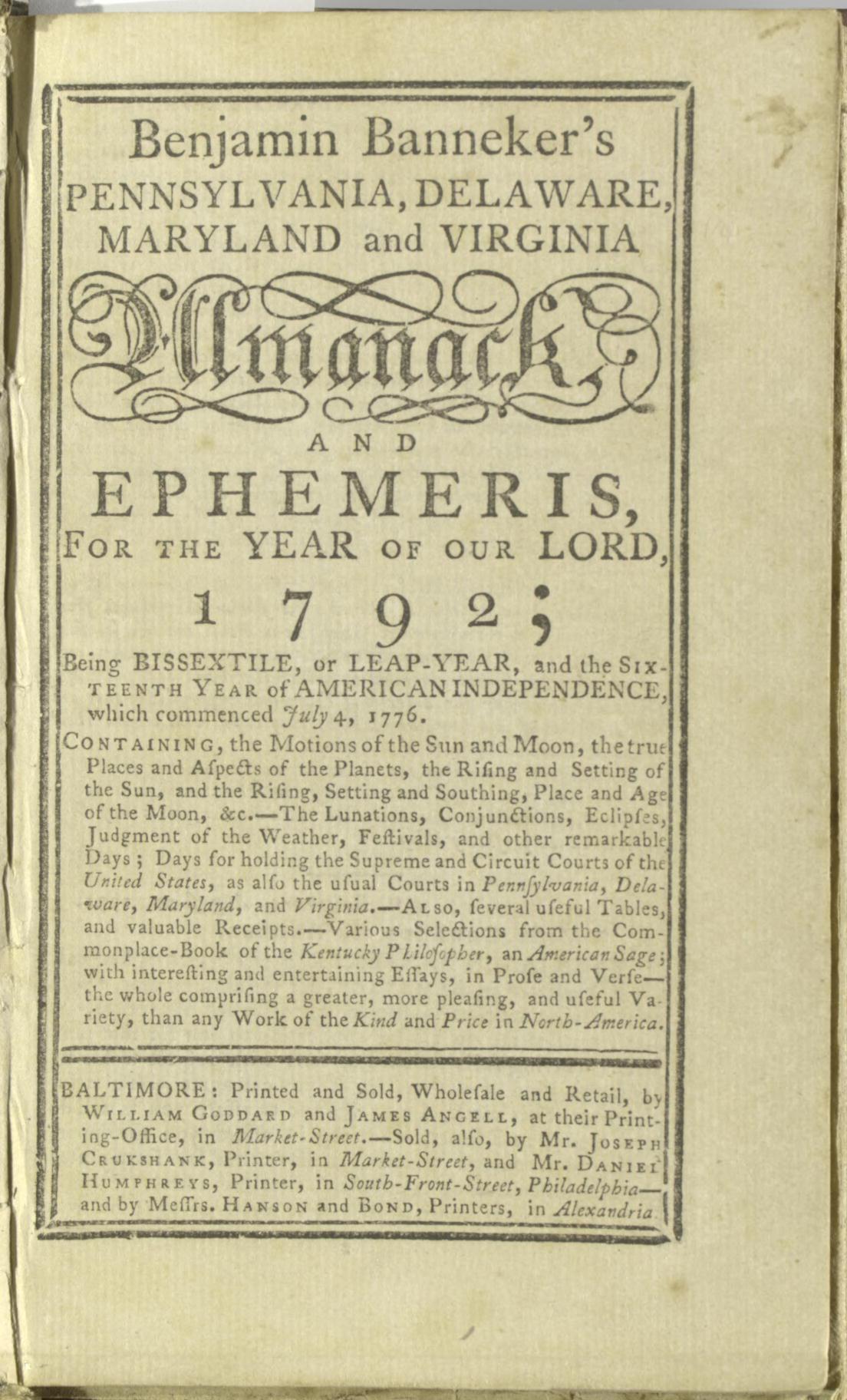
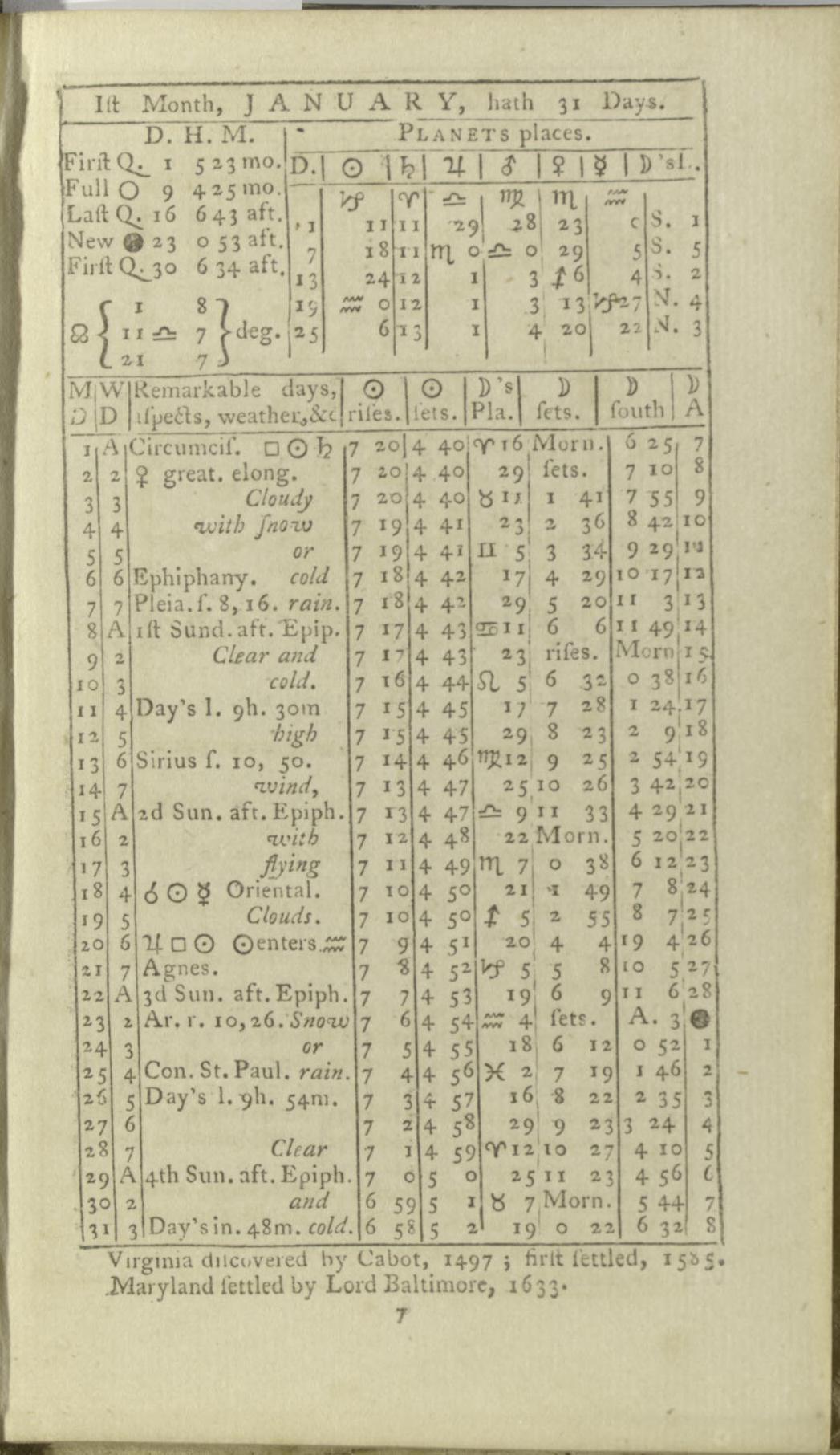
Banneker's work survives across institutions and objects. The Maryland Center for History and Culture catalogs an astronomical journal with calculations for the Sun, Moon, planets, and eclipses. The Library of Congress digitizes the 1792 almanac, printed in Baltimore by William Goddard and James Angell. Its pages join astronomical tables, practical calendar information, and antislavery material. Observation becomes a printed system readers can inspect and circulate.
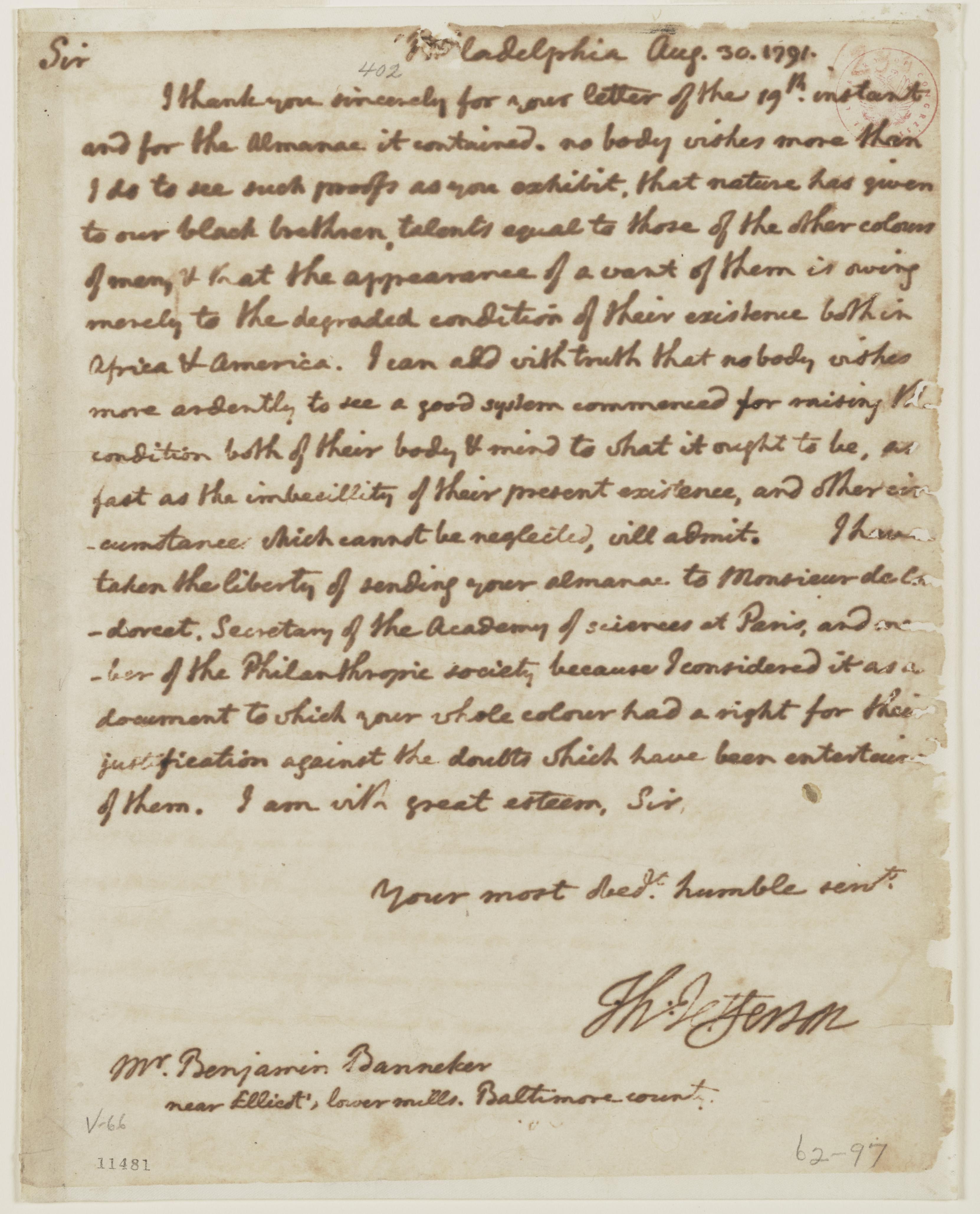
On August 19, 1791, Banneker sends Jefferson a manuscript almanac with a letter from near Ellicott's Lower Mills. He presents the calculation before publication and confronts a slaveholding secretary of state with the contradiction between liberty and slavery. Jefferson replies on August 30, praises the example, and sends the almanac to Condorcet in Paris. His reply belongs beside Banneker's argument, not over it.
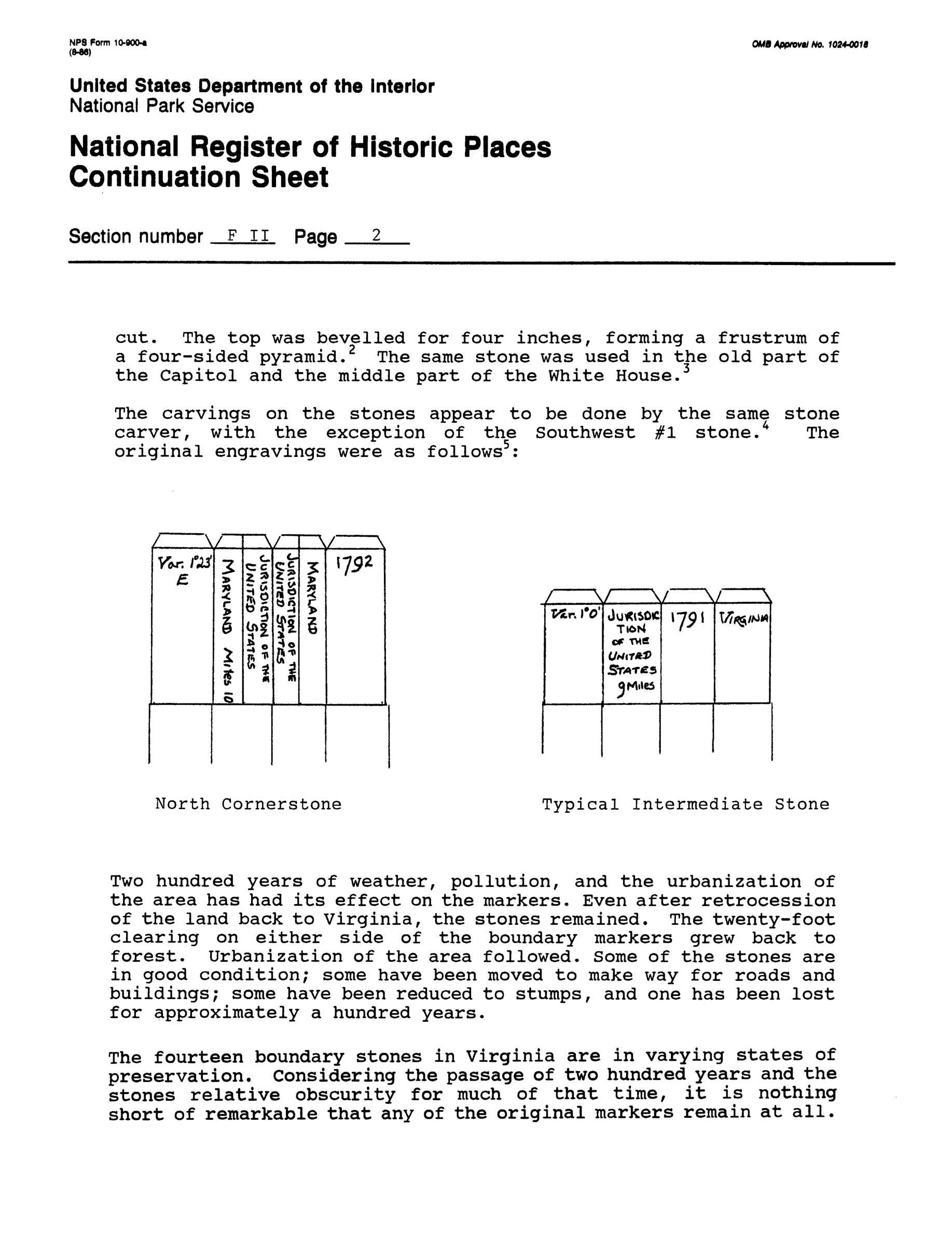
National Register documentation adds the survey record. It places Banneker with Andrew Ellicott's team from February to April 1791. His contribution is astronomical observation and calculation associated with establishing the boundary, including work used to locate the south cornerstone. Field crews perform the line surveying. Pierre L'Enfant's city planning is separate. Accurate scope shows what Banneker did.
Idea
The almanac is scientific work, practical publication, and public evidence. In the racial order of the late eighteenth century, people with power turn Black intellectual capacity into a question. Banneker answers with calculations that can be checked. He presents a manuscript made for circulation and connects that evidence to a demand for consistency.
That move supplies the episode's future-making test. Banneker measures a shared sky, converts measurement into tables, works inside a federal survey, and puts an argument into the mail. Knowledge travels from observation to print and into a dispute about who counts as fully human. The numbers enter politics because racist claims already try to define the limits of reason and citizenship.
This project classifies Banneker as ROOT. The National Museum of African American History and Culture calls him a prototype of an Afrofuturist, but Afrofuturism is a later name. ROOT is an editorial lineage, not Banneker's self-description. Measurement, publication, and a claim to equal capacity create a route that later Black future-making can travel.
World
Jefferson is context, not protagonist. He writes about natural rights while enslaving people. As secretary of state, he receives Banneker's challenge, replies courteously, and forwards the almanac to Condorcet. The record does not make that reply a conversion. Founders Online traces Jefferson's later disparagement of Banneker's independence. Liberty is announced as universal while its authors reserve power to decide who will receive it.
Banneker refuses the premise that freedom is Jefferson's gift. He begins from common humanity and makes the holder of power face his own language. The almanac is not a token of exceptional achievement. It is work made under unequal conditions, offered as a counterexample to racist theory.
The survey adds another layer. The federal district is measured into existence while the republic's promises remain violently partial. Andrew Ellicott directs the boundary survey. Astronomical observations establish positions. Field crews carry lines across land. Printers move calculations beyond the worksite. Specific credit lets the system itself come into view.
Future Echo
The next archive node is W.E.B. Du Bois and the data portraits created for the 1900 Paris Exposition. This is a curatorial pairing, not a claim that Du Bois copies Banneker. The connection is a recurring method: data used as a counter-claim when racist representation presents itself as fact.
Banneker's tables make celestial movement legible to a reading public. Du Bois and his collaborators later use charts to describe Black life against a culture organized to misdescribe it. Both cases ask who gets to measure the world, who gets to publish the measurement, and what happens when evidence meets an ideology committed to ignoring it. The echo is not sameness. One project is an eighteenth-century almanac joined to a political letter. The other is a modern sociological display. The route between them is editorial and explicit.
The reconstructions
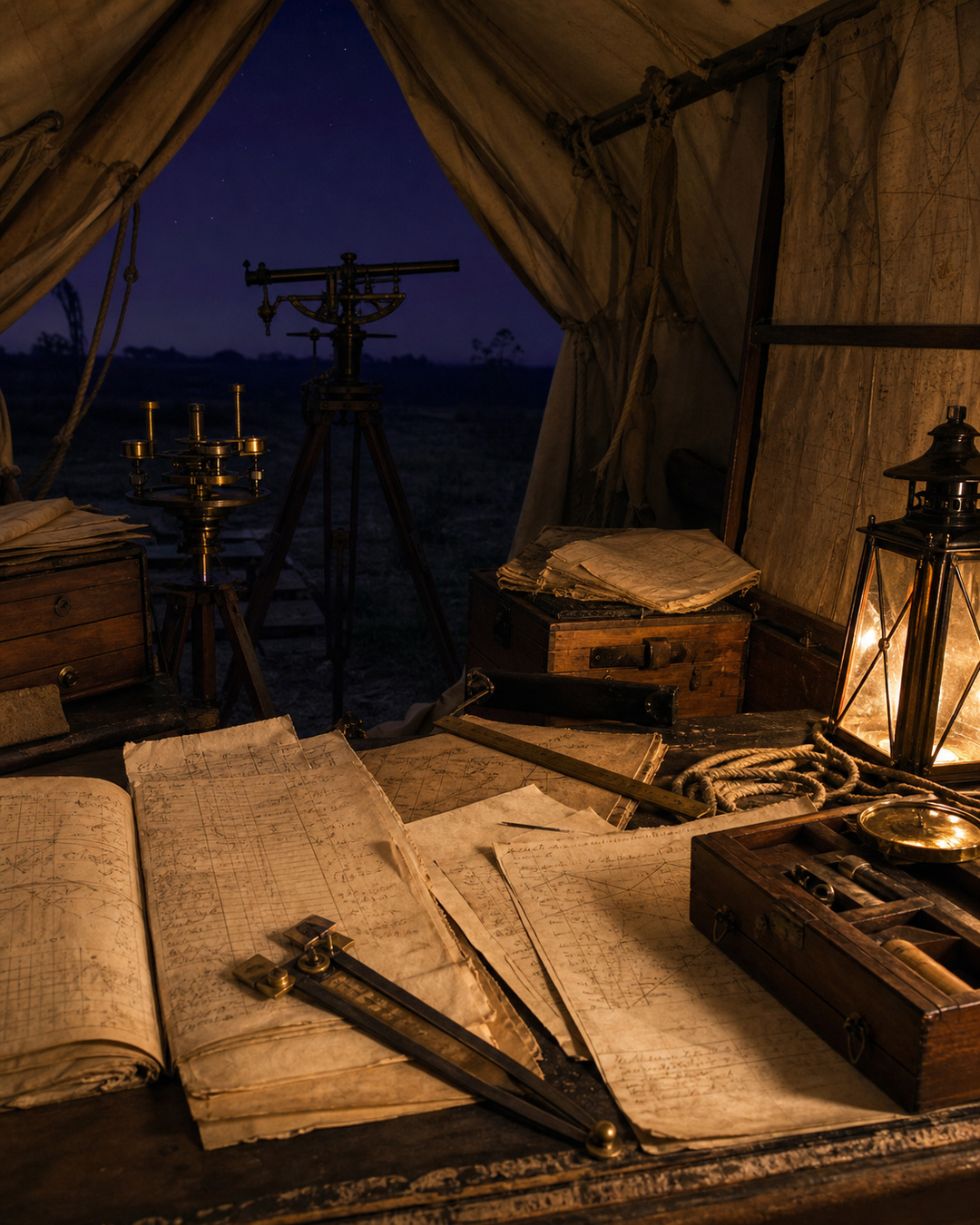
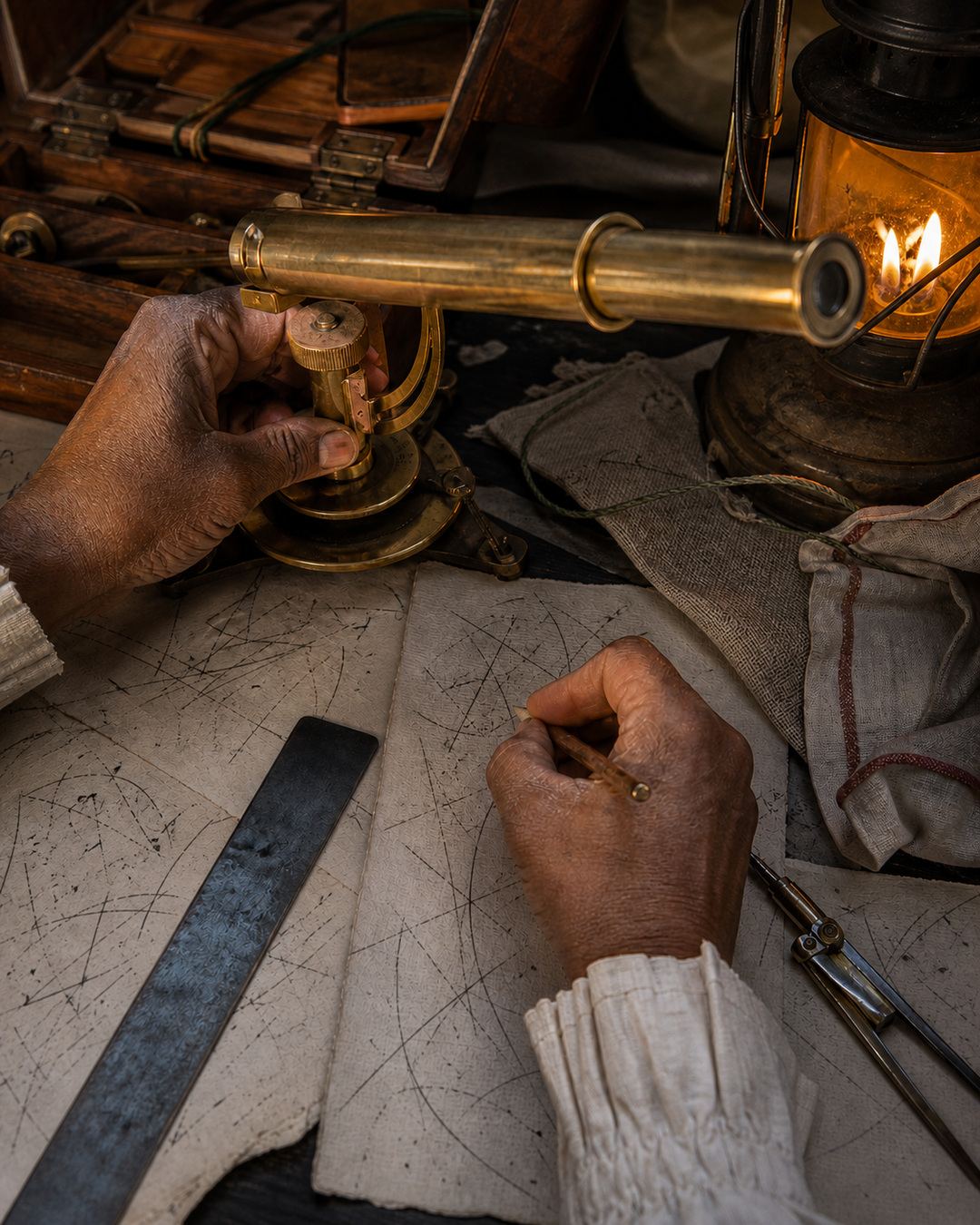
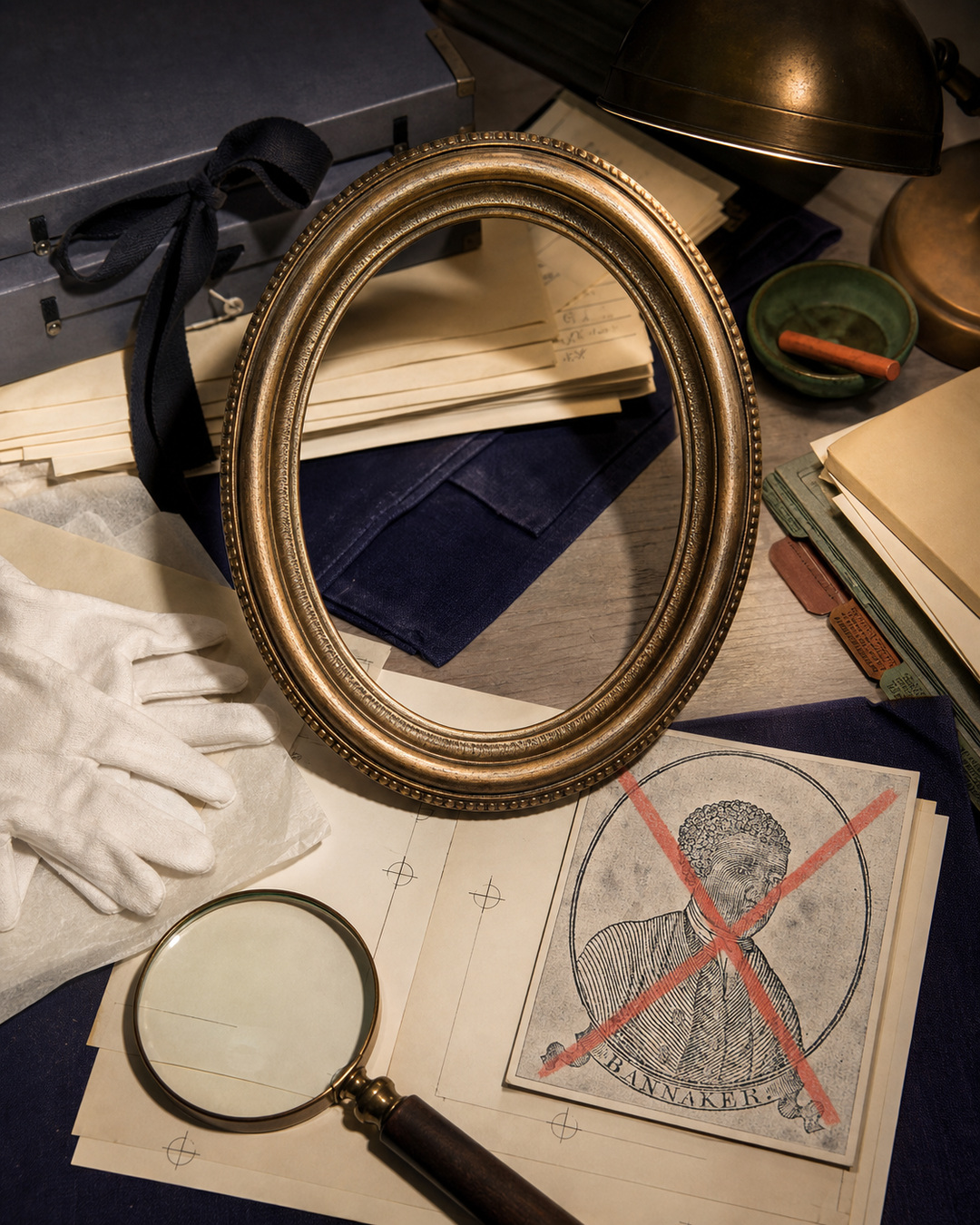
Where the record is thin, the archive says so. Four labeled interpretations, each constrained by the documented sources above. None claims to be an archival photograph.

Visual
Originals appear first: almanac cover, astronomy table, Banneker's letter text, Jefferson's reply, and National Register boundary documentation. Reconstructions enter only after those anchors.
The generated scenes avoid a claimed face. An observation tent shows instruments and lantern light. Hands record a transit without readable invented prose. A diagram moves from celestial coordinates into boundary geometry. An empty frame and crossed stock woodcut make absence visible without turning the familiar image into a likeness.
Every reconstruction carries: Visual interpretation based on documented historical sources. This is not an archival photograph. Missing evidence is not an invitation to manufacture certainty.
Watch
The reel and the long-form documentary move from calculation to location, publication, confrontation, scope correction, and myth correction. They open on original almanac material over boundary geometry and close on receipt IDs and the Du Bois relationship node. Reconstructions follow the artifacts that constrain them. Readable source cards remain on screen long enough to inspect.
Listen
Marc narrates. A future audio version may include a short, cleared excerpt from Banneker's letter. No synthetic Banneker voice is used. The performance identifies quotation, source, and date so the historical words are not confused with narration.
Receipts
BAN-001: The National Park Service supplies Banneker's birth and death dates: November 9, 1731, and October 9, 1806. https://www.nps.gov/planyourvisit/event-details.htm?id=9E8381B6-CAE2-B0AF-97B146BD886DAFD0
BAN-002: The Maryland State Archives publishes the 1774 deposition in which Mary Banneker identifies Benjamin as the lawful son of Robert Banneker. https://msa.maryland.gov/msa/refserv/bulldog/bull97/html/bull11-7.html
BAN-003: National Register documentation supplies the narrow account of his federal district work: astronomical observation and calculation within Andrew Ellicott's boundary-survey team. https://npgallery.nps.gov/NRHP/GetAsset/db38eeae-0b63-4f84-aed8-cb748daa5872
BAN-004 and BAN-005: Founders Online presents Banneker's August 19 letter and identifies the recipient's manuscript at the Massachusetts Historical Society. The Library of Congress holds Jefferson's August 30 reply. https://founders.archives.gov/documents/Jefferson/01-22-02-0049 | https://www.loc.gov/item/mcc.028/
BAN-006 and BAN-007: The Library of Congress digitizes the 1792 almanac. The Maryland Center for History and Culture catalogs the astronomical journal. These are separate holdings and should never be collapsed into a single object. https://www.loc.gov/resource/rbc0001.2019amal50590/ | https://mdhistory.libraryhost.com/repositories/2/resources/965
BAN-008 and BAN-009: Smithsonian Libraries explains that no known contemporary likeness survives and that the repeated woodcut was likely stock. The National Park Service records the house fire and the destruction of the wooden clock. https://blog.library.si.edu/blog/2017/02/15/americas-first-known-african-american-scientist-mathematician/ | https://www.nps.gov/places/sw-9-intermediate-boundary-stone-of-the-district-of-columbia.htm
Disagreement
Four corrections stay visible. First, Banneker contributes astronomical observations and calculations to a team survey. The surviving record does not support a lone-hero account or the story that he reconstructs L'Enfant's plan from memory. Second, the familiar woodcut is likely a stock image, and no contemporary likeness is known. Third, institutional accounts support a wooden clock associated with Banneker, but the evidence reviewed here does not support a national priority claim. Fourth, Jefferson's reply is courteous but is not proof that he accepts Banneker's equality argument or resolves the contradiction of slavery.
These limits are not disclaimers attached to a smaller story. They are the method. The archive holds what can be shown, labels what is inferred, and leaves unsupported certainty outside the frame.
---
Episode 001 | ROOT | Benjamin Banneker: The Sky Was Evidence
Next: Episode 002 | W.E.B. Du Bois: The Data Portraits